Stunning stretches of fine sandy beaches, a gleaming white historic centre adorned with plants and flowers, an imposing castle dating back to the year 1000, a lively nightlife scene to rival that of Andalusia’s most famous cities, and an exceptional frontier-town atmosphere: this is what the town of Tarifa can offer travellers who decide to visit it during a tour of Andalusia.
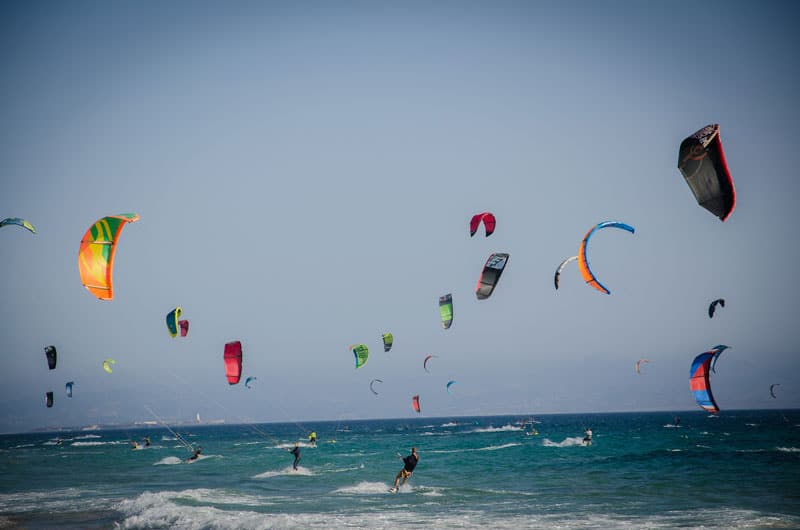
One of the defining features of Tarifa is the strong, warm Levante wind that blows in from Africa and is ideal for activities such as surfing. From the west comes the Poniente wind, which is better suited to kitesurfing. In many ways, Tarifa is Andalusia’s capital of water sports, but you can also go horse riding or join excursions to spot whales (whale watching), as well as the many birds that live in or migrate through this area (birdwatching).
If riding the waves is not your thing and you are instead interested in history and ancient architecture, you may be wondering what to see in Tarifa… As well as the Castillo de Guzmán el Bueno, you should not miss the Puerta de Jerez and the seafront archaeological site of Baelo Claudia. And there is plenty to satisfy your appetite too: Andalusian cuisine is a delight for food lovers, and tapeo in Tarifa is the ideal way to sample traditional dishes and enjoy a drink with friends. Be sure to try the bluefin tuna and desserts made with dried fruit and honey!
Contents
Tarifa: what to see? Attractions in the town
Here is what you should not miss in Tarifa:
Tarifa’s historic centre
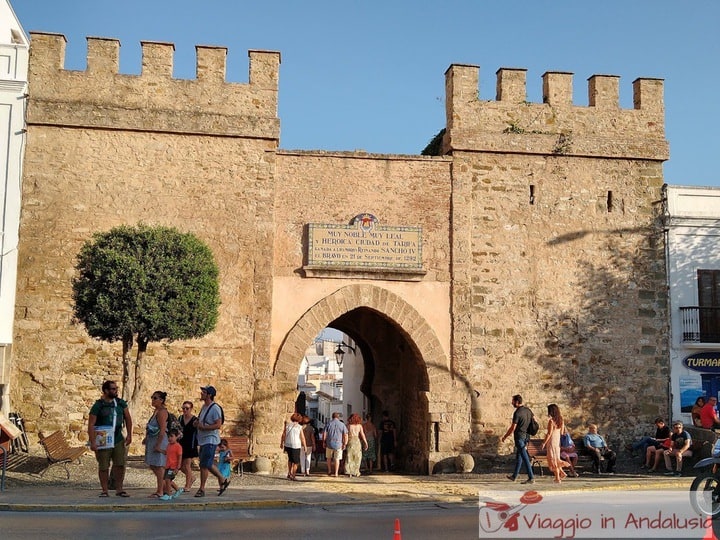
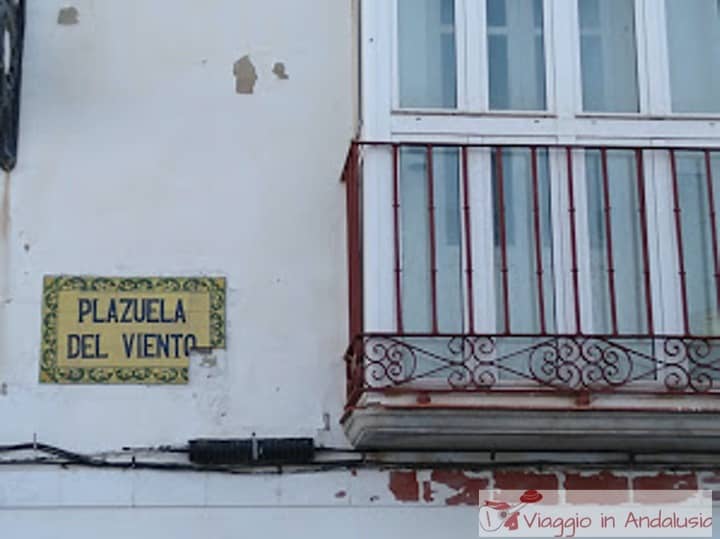
Puerta de Jerez, the only surviving ancient gateway, is located on Avenida Andalucía and provides access to the compact old town, which is easy to explore. As you stroll through the narrow streets lined with whitewashed houses, wrought-iron balconies and flower-filled patios, I recommend stopping to visit the Iglesia de San Mateo, Tarifa’s most important church, located on Calle Sancho IV el Bravo. It is not particularly large, but it is Gothic in style and has an attractive façade with an imposing entrance portal. It was built over an ancient mosque.
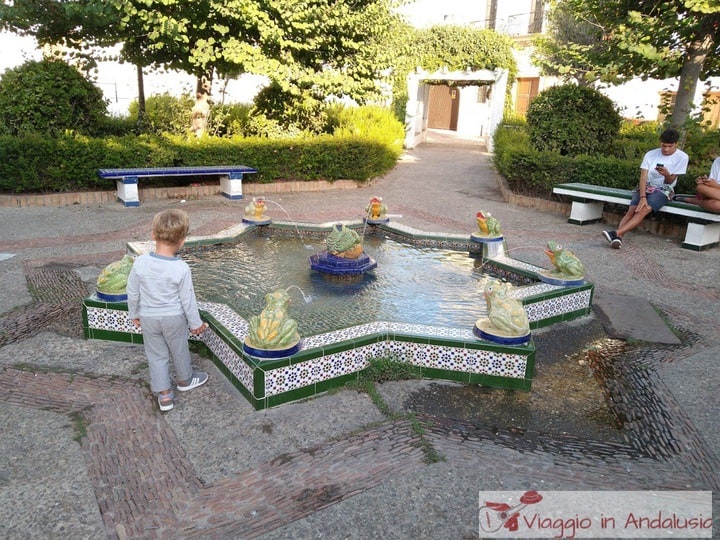
Overlooking Plaza Santa María, which is usually overlooked by tourists and is therefore very peaceful, are the Town Hall with its splendid Andalusian-style façade, the white building of the Mercedes Gaibrois Municipal Public Library and the Iglesia de Santa María, the oldest church in the town. The square is dominated by an eight-pointed star-shaped fountain, with distinctive frog statues positioned at each point: quirky and unusual, it brings to mind the Fuente de las Ranas in María Luisa Park in Seville.
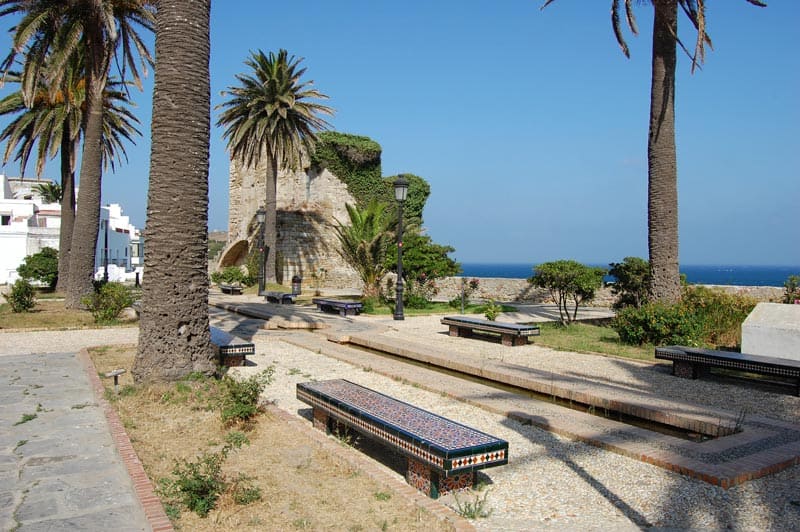
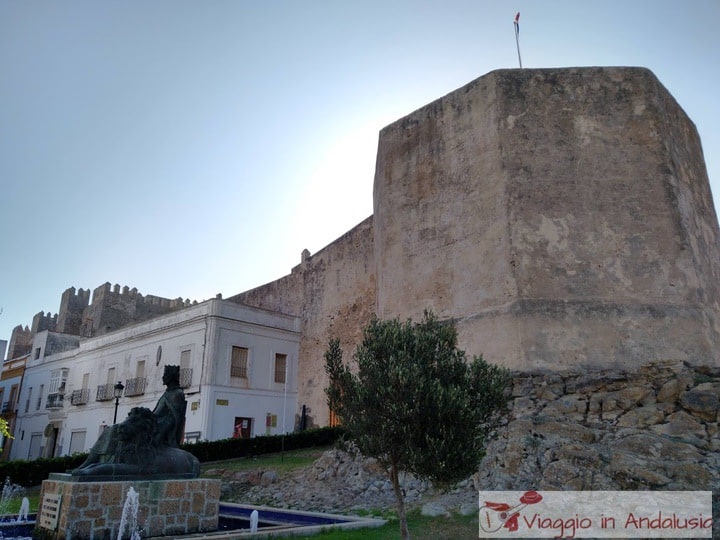
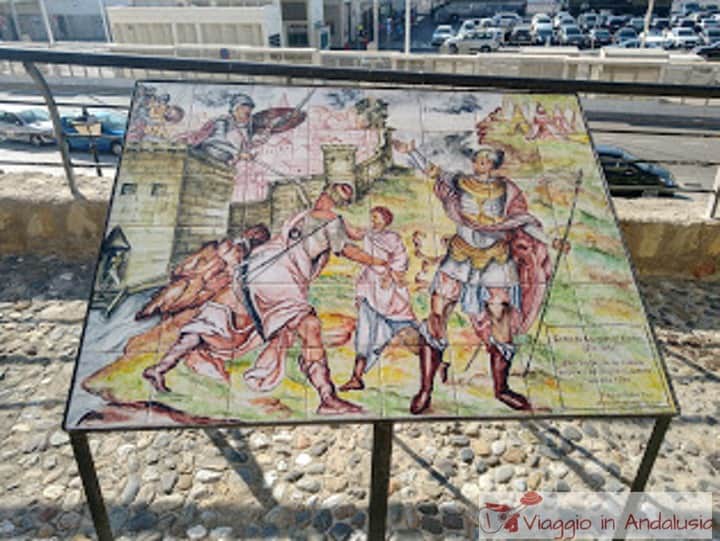
You are just a few steps away from the town’s most imposing monument: the Castillo de Guzmán. Overlooking the sea, this mighty fortress dominates both the townscape and the Strait as far as Morocco. It is inextricably linked to the tragic choice made by Alonso Pérez de Guzmán, who in 1294 chose to sacrifice his son rather than surrender the town to the Muslims. The statue of Guzmán the Good stands at the beginning of the pleasant promenade along Paseo de La Alameda, among small bars overlooking the sea and tall palm trees.
- The castle is open to visitors from Wednesday to Sunday, from 10 am to 4 pm, with last admission at 3.15 pm.
- Admission costs €4 for adults; €2.50 for young people aged 12 to 18, pensioners and people with disabilities; and is free for children under 12. For up-to-date prices, read here.
Isla de las Palomas
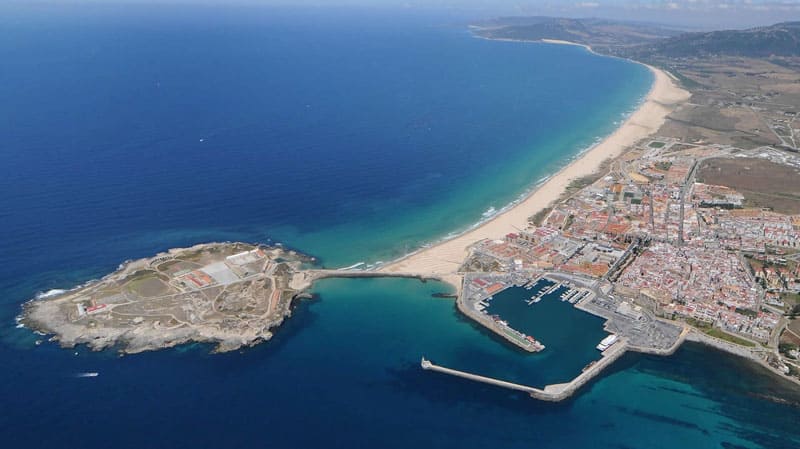
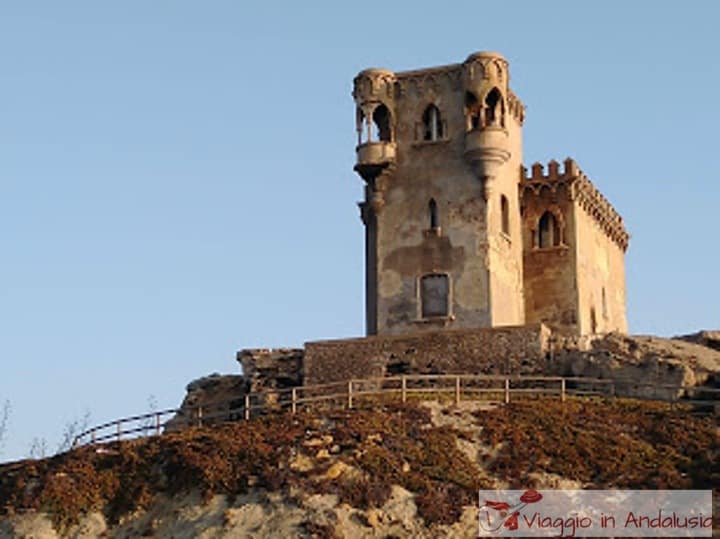
Tarifa’s other iconic road is the causeway linking the town centre with Isla de las Palomas, where you can stand exactly between two seas: as you walk along it, you will have the Atlantic Ocean on one side and the Mediterranean on the other. A photo is essential, preferably with the imposing Castillo de Santa Catalina, a relatively modern castle built in 1929, in the background.
Il Mirador del Estrecho
Tarifa is a frontier town. During your stay, you will have the Atlantic Ocean to the west and the Mediterranean Sea to the east, while in front of you lies the point where the two bodies of water meet; a little farther away, Morocco is clearly visible. The best viewpoint is the Mirador del Estrecho. It is located 8 kilometres from the centre of Tarifa, along the N-340, and on clear days Africa seems almost within touching distance.
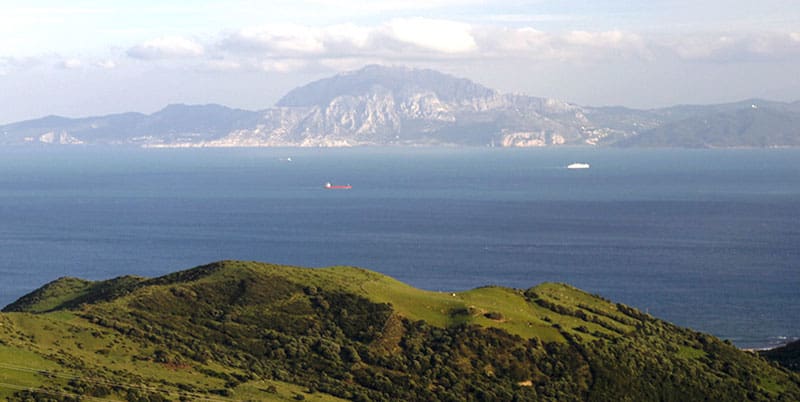
The area around Tarifa
Tarifa marks the beginning of a beautiful stretch of coastline along the Costa de la Luz in the province of Cádiz. Here are some attractions and beaches that are undoubtedly worth visiting:
The archaeological site of Baelo Claudia
There is also a splendid archaeological park near Tarifa. It lies around 22 kilometres north-west of the town, so it can easily be reached by car in just over 20 minutes by taking the N-340 and turning onto the CA-8202. We are just a short distance from the popular Playa de Bolonia , famous for its ocean-facing dune: the archaeological site of Baelo Claudia stands directly opposite the sea, and the view combining the well-preserved ruins with the blue water in the distance is magnificent.
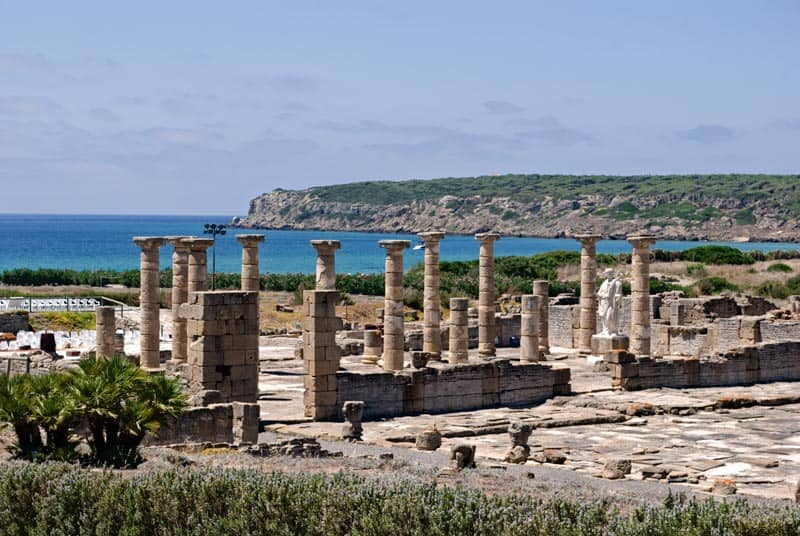
Admission to the Baelo Claudia site is free for European Union citizens.
Tarifa to Tangier ferry: from Europe to Africa in under an hour!
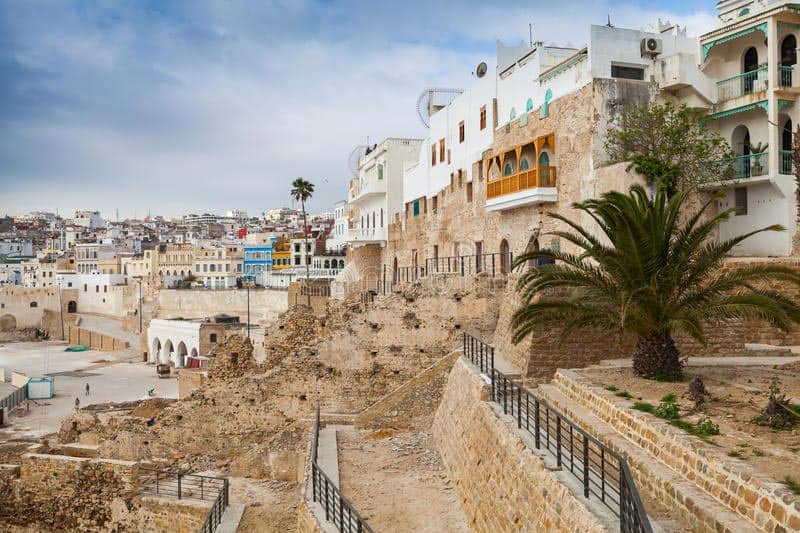
There are only 14 kilometres between Tarifa, the southernmost town in Europe, and the Moroccan coast, so you could easily organise a day trip to Tangier. The ferry takes just 35 minutes to cross the Strait, bringing you to Africa. Ferries depart from the Port of Tarifa roughly every hour and reach Tangier in around 60 minutes.
Here is an organised tour that allows you to take a day trip from the Port of Tarifa to Tangier, on the Moroccan coast. The package includes the ferry crossing, lunch, bus transfers and a guided tour of the main places of interest:
Tarifa’s best beaches
Tarifa is known as the city of wind, so unless you are a surfer, I recommend always checking the weather conditions and wind strength before planning a day at one of Tarifa’s beaches. This will save you from travelling several kilometres only to discover that it is impossible to stay on the beach because of the strong wind.
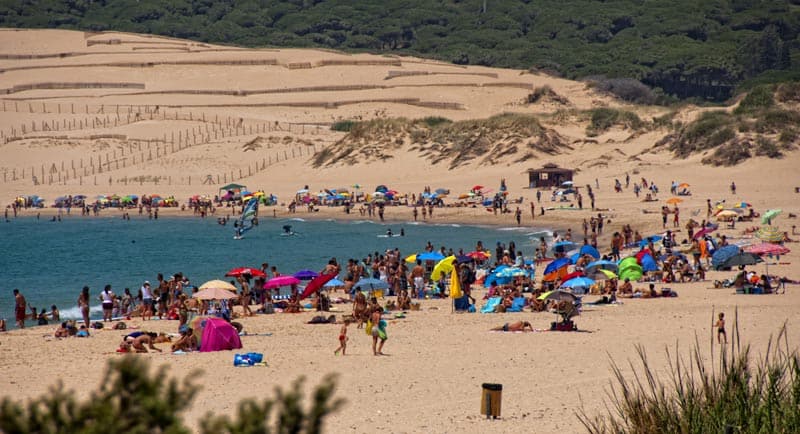
The most popular beaches in the town are Playa Chica and Playa de los Lances, but there are several interesting options around a 20-minute drive away. In particular, Playa de Bolonia and Playa de Valdevaqueros are famous for their dunes and for sometimes being among the only wind-free beaches in Tarifa—more or less…!
If you would like to know which ones are worth visiting, read my article on the beaches of Tarifa. If, on the other hand, you would also like to discover other parts of the Cádiz coastline, read our article on the beaches of Cádiz and our guide to what to see on the Costa de la Luz.
Map of Tarifa attractions
How to get to Tarifa
Tarifa is around 2 hours from Málaga, 1 hour 30 minutes from Cádiz and 3 hours from Seville. The best way to visit Tarifa and the whole Costa de la Luz is to hire a car in Málaga or Seville, so that you can explore the coast and inland areas more freely. The bus station, served by Comes and Portillo, is located on Calle Batalla del Salado: here are the available routes departing from the various Andalusian cities.
Where to stay in Tarifa
Despite its small size, Tarifa offers a wide variety of hotels, guest houses and holiday rentals. You can find accommodation both in the historic centre and along the seafront at Playa de los Lances, but it is advisable to book well in advance because during the summer the available properties are in high demand among surfers—both those who practise the sport and those who enjoy watching it—and prices tend to rise. Below you will find the accommodation available in these areas of Tarifa.
I recommend the Hotel & Spa La Residencia Puerto, which is ideally located for visiting the castle and the historic centre. Some rates also include access to the Moorish-style spa.
