What to See in Cádiz: Attractions and Places to Visit
Overlooking a bay that bears its name, kissed by the Atlantic Ocean and surrounded by splendid beaches, Cadiz, a luminous white-and-yellow city of very ancient Phoenician origins (ancient Gadir, 8th century BC), despite being a destination somewhat less frequently chosen by tourists on their tours of Andalusia, proudly retains an enchanting personality unique in all of Andalusia.
To the city’s long and glorious history is joined a spontaneous multicultural tradition, one that suffuses the lively, convivial atmosphere (think of the famous Carnival!) that accompanies the traveller in search of everything there is to see in Cádiz. Not to mention the gastronomy: the seafood is excellent, whether enjoyed in the fishermen’s quarter (Barrio de la Viña) or elsewhere in the city.
But what are the attractions we must not miss when visiting Cádiz? What to see in this small and charming gem that boasts such an ancient history, so much so that some have described it as the “oldest city in Europe“? Let’s discover together what to see in Cádiz.
On average, a visit to the city doesn’t take more than a day but, before getting lost in the streets of the city and leaving the Cadiz guide in your rucksack – intoxicated by the salty air and by the lively, contagious personality of the locals – it’s worth understanding clearly what to see in Cadiz, so you don’t miss the must-see attractions of this maritime Andalusian gem, from which Christopher Columbus set sail for his second and fourth voyages to the Americas. Who knows — it might also be a land of discoveries for you, as we hoped on our 5-day tour of Andalusia.
The historic centre contains all the local points of interest, and the boundary that separates it from the modern city core is the Puertas de Tierra, what remains of the old eighteenth-century walls. There is nothing to see in the new Cadiz, so concentrate your visit from the Puertas northwards, starting from the Barrio Santa Maria. From here our itinerary into the heart of the Andalusian city that lies beyond the Pillars of Hercules at Gibraltar begins.
New Cathedral
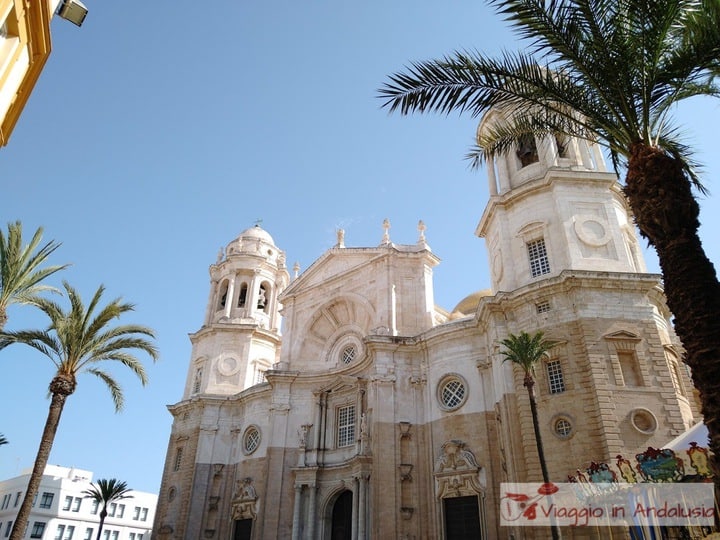
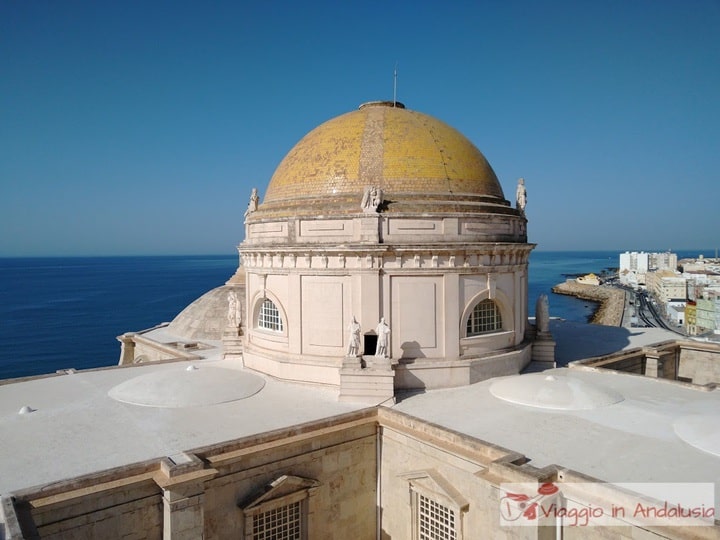
If there is an architectural element that shines in the memory of travellers who have had the privilege of visiting Cádiz, it is precisely the yellow dome of the magnificent Catedral Nueva, which was built over more than 100 years. This long span of time clearly brought with it some stylistic changes to the building’s decoration: it was originally conceived in the Baroque style and was finished with elements of Neoclassical design. The best place from which to photograph the Cathedral is Avenida Campo del Sur, the seafront behind the cathedral.
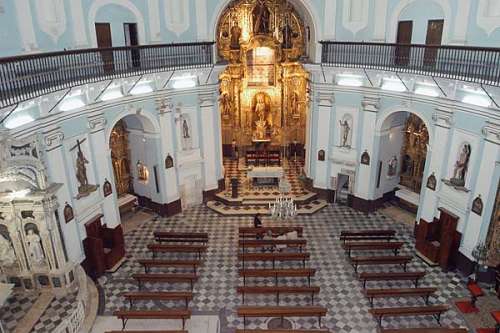
If the exterior leaves you breathless with its beauty, expect a majestic, well-proportioned Neoclassical interior too, very different from the other cathedrals in the region. Those who loved the Gothic of Seville Cathedral may be a little disconcerted, but I assure you the Catedral Nueva will know how to win you over.
Curious fact
The composer Manuel de Falla is buried in the cathedral’s beautiful crypt. An important theatre in the city, the Gran Teatro Falla, with its Mudéjar-style façade, is named after him.
Torre de Poniente and Torre del Reloj
The two bell towers of the cathedral are open to the public, but they may sometimes be closed for maintenance. At the time of our last visit (August 2019), the Torre de Poniente was closed for restoration, while the Torre del Reloj was open. With the Cathedral’s general ticket you can reach the top of the tower to enjoy a spectacular panorama of both the cathedral and the whole city of Cadiz, with the sea surrounding it. As with the Giralda in Seville, here you won’t have to clamber up steps, but will ascend via ramps.
For up-to-date prices and opening times, consult the official website. The purchase of the general ticket includes:
Cathedral
Crypt
Choir
Sacristy
Casa de Contaduría (Cathedral Museum)
Clock Tower
Populo Neighbourhood
Right next to the cathedral lies Cadiz’s best-known neighbourhood, the Barrio del Populo, which on one side faces the sea at Campo del Sur, offering remarkable views of the cathedral. The Barrio is the traditional web of narrow, winding streets on which, between a little archway and a small square, elegant townhouses, delightful white cottages and cosy-looking bars open out onto the street.
Noteworthy is the Iglesia de Santa Cruz, Cádiz’s ancient 13th-century cathedral, rebuilt in the Baroque style in the 18th century and much frequented by local parishioners. Beside the church is the Casa de Contaduría, which is the museum of the Catedral Nueva: with a cathedral ticket you can enter this handsome building free of charge, and its exhibition rooms are well worth a short visit.
Roman Theatre
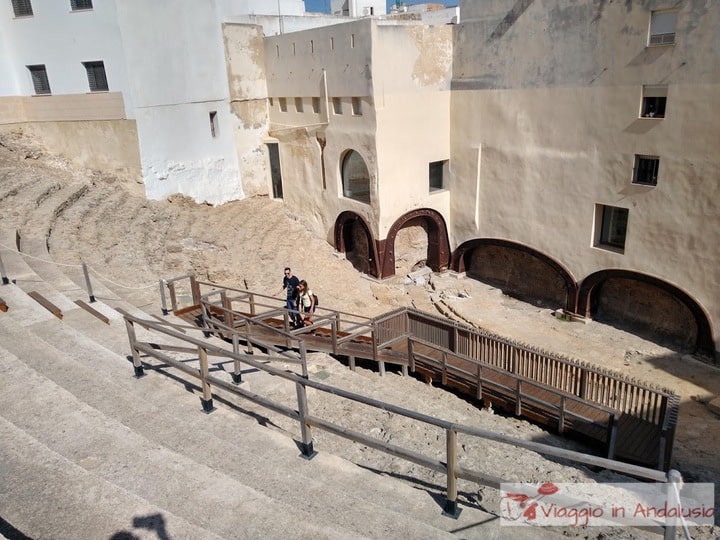
A little hidden in the heart of the Barrio del Populo, behind the old cathedral, is an important testimony to the Roman presence in Cádiz’s history: a Roman Theatre, which can be visited free of charge. The theatre was built in 70 BC by the Cádiz native Lucius Cornelius Balbus “the Elder”, an adviser to Caesar. Unfortunately a large section of the theatre lies beneath the houses of the neighbourhood, but thanks to the information panels and reconstructions in the museum, one can imagine the theatre’s former grandeur.
Plaza de San Juan de Dios
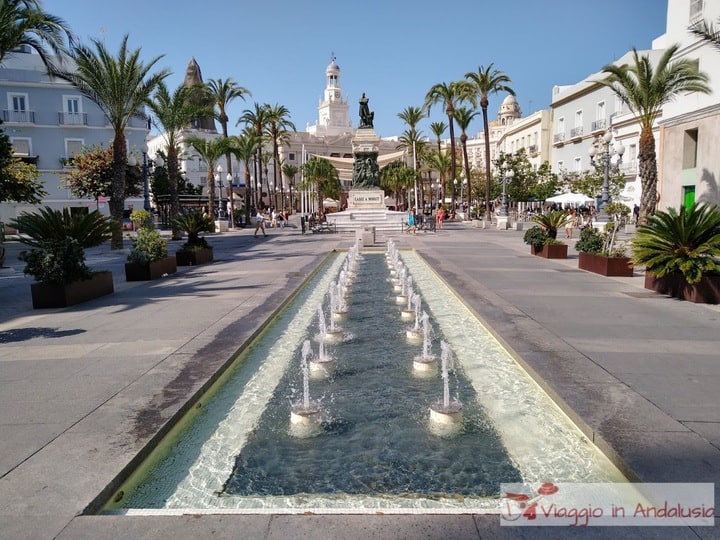
Just outside the medieval maze of the Barrio del Populo, beyond the walls (or what remains of them), lies the beautiful and bustling Plaza de San Juan de Dios, which I recommend photographing, seeking a pleasing viewpoint of its fountains and the statue of the Spanish politician Sigismundo Moret. Overlooking the square, animated by a constant comings-and-goings of people, are the Town Hall, the church of San Juan de Dios and the Casa de los Pazos Miranda.
Plaza de Mina
The birthplace of De Falla is in Plaza de Mina, a lively square-shaped space divided into four walkways lush with exotic vegetation and surrounded by elegant palaces in Isabelline. Although less animated than Plaza de San Juan de Dios, this is a nerve-centre of Cádiz: what of particular historical and artistic interest is there to see in this square after a stroll amid its curious botanical variety?
Museum of Cádiz
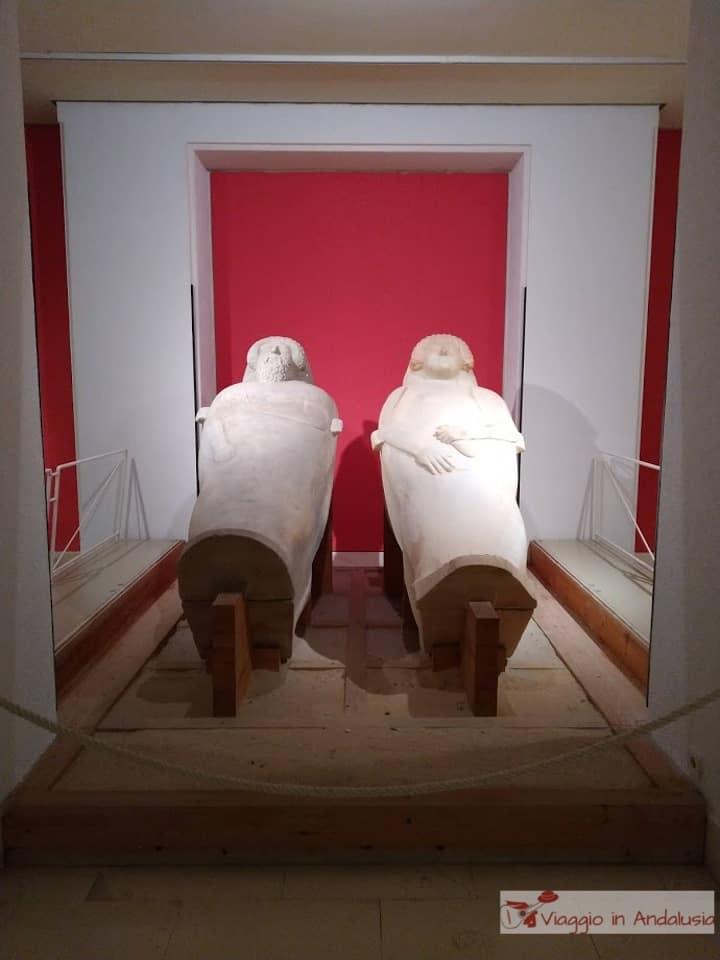
In Plaza de Mina you will find this remarkable and underrated museum with free entry, which offers visitors an impressive archaeological collection that attests to the city’s very ancient Phoenician origins. In the photo you can see the centrepiece of the collection: a pair of Phoenician sarcophagi.
You can also visit the section devoted to the Roman period of Gades, where, among other things, several amphorae used in trade with Rome are on display. Finally, the Museo de Bellas Artes, which houses the painting that proved “fatal” for the painter Bartolomé EstebanMurillo, “The Mystic Marriage of Saint Catherine”, during the painting of which the artist fell from the scaffolding and died.
Also take a look at Cádiz’s puppet collection: besides the famous Carnival, the city’s quirky inhabitants put on a satirical puppet festival. Museum opening hours are available here.
Oratory of the Holy Cave
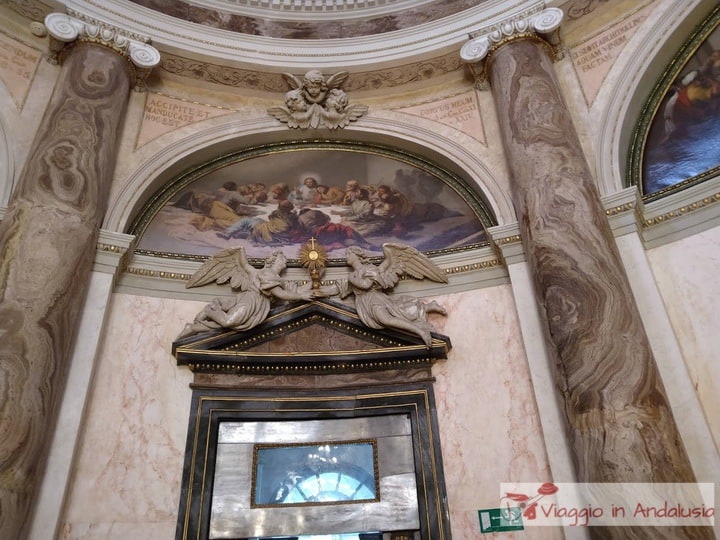
Hardly anyone visits this small oratory at calle Rosario 10, yet they do not realise they are missing some works by the great painter Francisco Goya, who painted 3 of the lunettes adorning the chapel’s vaults here. Not only that: for this oratory, founded by the Congregation del Retiro Espiritual in 1730, Haydn composed The Seven Last Words of Our Redeemer on the Cross: the sorrowful strains of the piece were intended for the spiritual exercises held here, but you will still hear them resonate during the cultural visit. You can find opening times and prices here.
Plaza de España
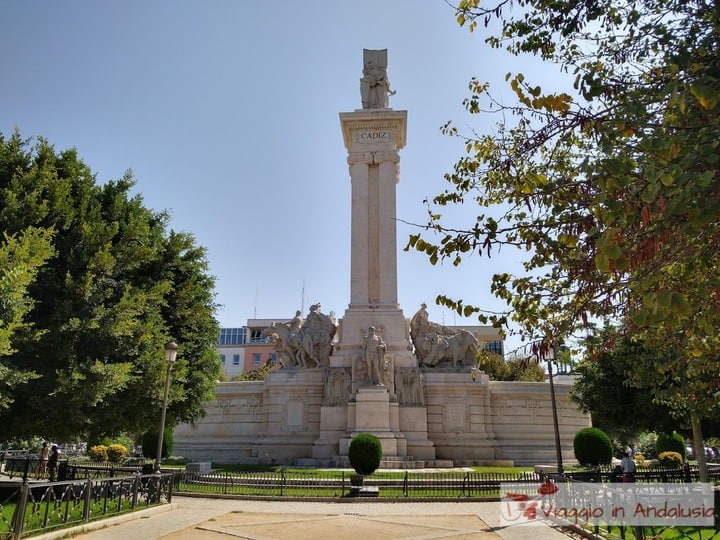
In this large square, not far from the port of Cádiz, surrounded by splendid palaces and a lush garden where exotic flowers and plants bloom, stands an enormous Monument to the Constitutionof 1812, promulgated by the Cortes of Cádiz after the Napoleonic occupation. The monument was built over the course of nearly 20 years, beginning with the first centenary of the event.
It’s worth visiting this square even just to grasp the importance of Cádiz in Spain’s political destiny, but I’m sure you’ll especially enjoy photographing the curious plant species that adorn the garden. If you want to see buildings with a decadent air, head to the north-west corner of the square and point your cameras towards the Casa de los Cuatro Torres and la Casa de los 5 Torres.
Oratory of Saint Philip Neri
About a ten-minute walk from Plaza de España, at Calle San José, 36 you’ll also find the Oratorio de San Felipe Neri, an 18th-century sacred building that was the scene of the historical events mentioned in the previous paragraph: here, between 1810 and 1813, the Cortes of Cádiz were formed and convened, concentrating the revolutionary and theoretical activity that later gave rise to the Constitution. The oratory, elliptical in shape, is valued for containing a Immaculate Conception by Murillo within a rococo-style retablo. See updated prices and opening times here.
Plaza del Topete and surroundings
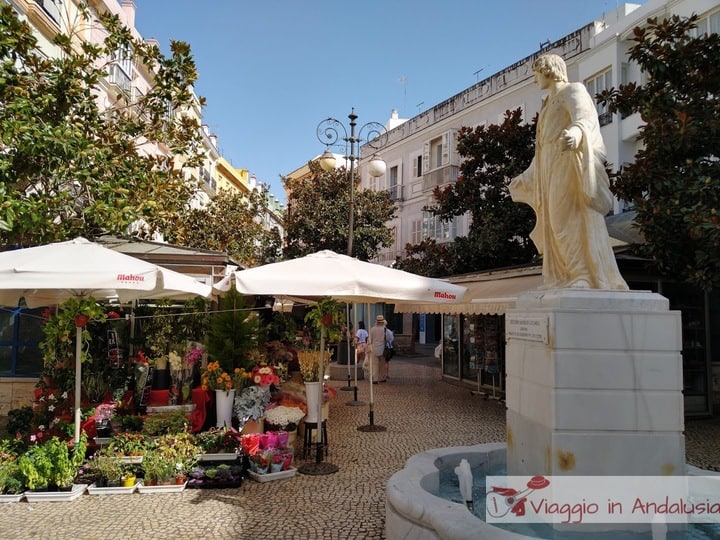
Plaza del Topete, also known as Plaza de las Flores, stands out for its colourful, warm local atmosphere, a world away from the architectural excesses of the aforementioned Plaza de España. Besides the striking post office building, small bars and flower stalls adorn this small triangular square. Not far from Plaza del Topete, you’ll find the old Mercado Central recently restored, and the Torre Tavira, another notable vantage point over the city made famous by its camera obscura.
Barrio de la Viña
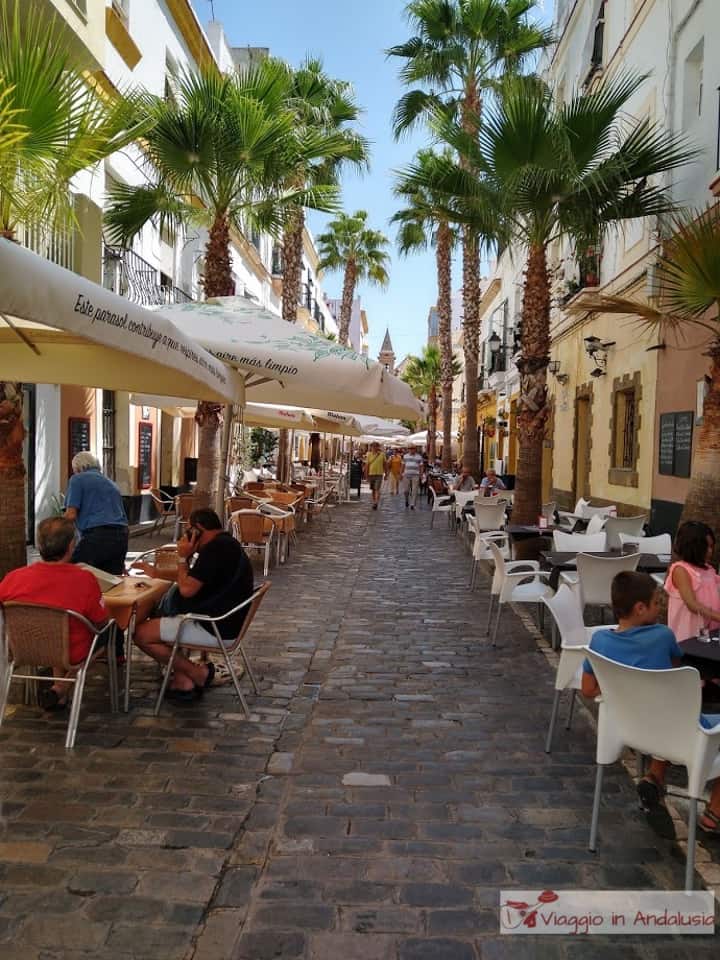
An old fishermen’s quarter of Cádiz, this barrio is centred mainly around the colourful and noisy Calle Virgen de la Palma, where almost all the neighbourhood’s restaurants are located. Not far away is the simple and unadorned Plaza del Tío de la Tiza, where, needless to say, the palm trees take centre stage, serving as a pleasant antechamber to the Playa de la Caleta, the most visited beach in Cádiz along with Playa de la Victoria.
Playa de la Caleta and the two castles
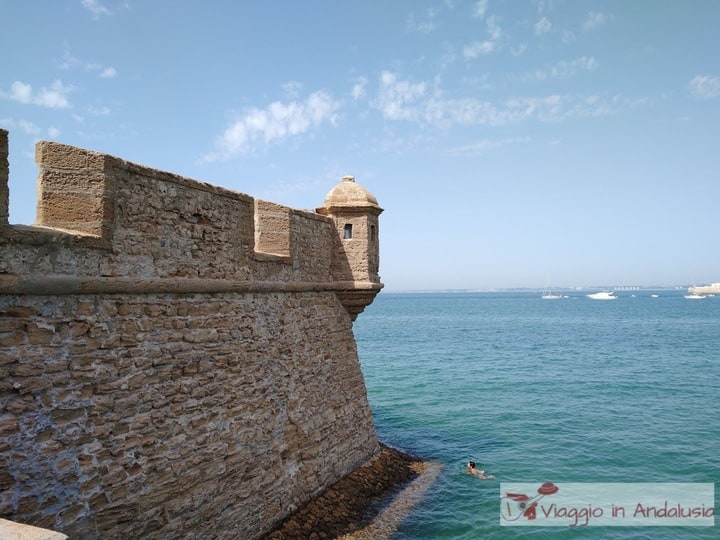
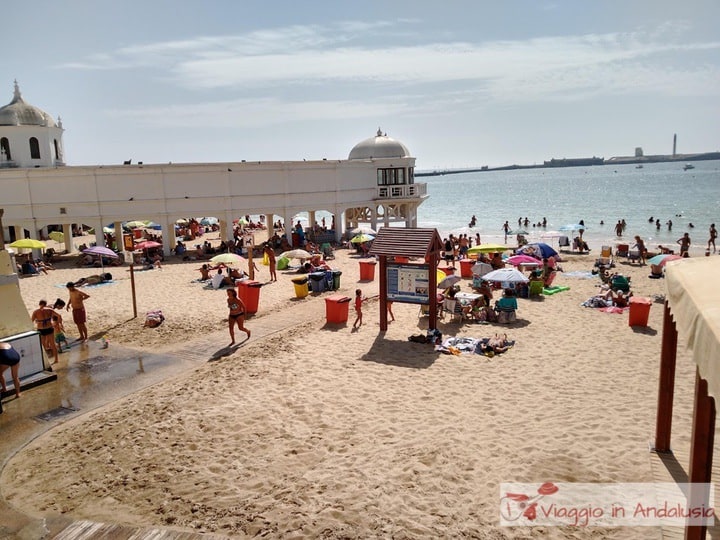
This small beach faces a cove to the north-west of the centre and is quite popular. Don’t miss a pleasant stroll along the seafront, reaching, via Paseo Fernando Quiñones, the Castillo de San Sebastián, which stands on the site where, according to tradition, a temple dedicated to the worship of the god Cronus once stood. In summer you’ll see plenty of kids diving into the water, using the low wall that runs along the promenade as a springboard.
At the opposite end of the seafront stands the Castillo de Santa Catalina, a late-sixteenth-century star-shaped fortress, perfectly preserved and used for recreational and community purposes. The waters at Playa de la Caleta are not always clean, but the presence of the white building that once served as a seafront spa makes the view more pleasant and invites a visit.
Genovés Park
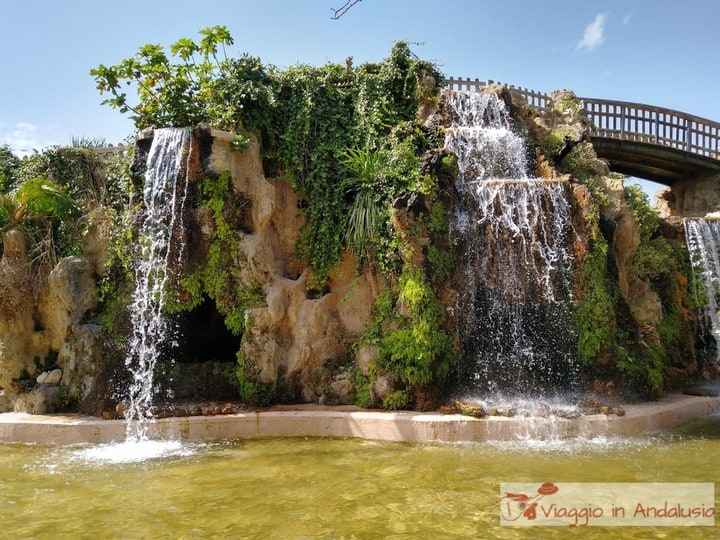
On the seafront, walking north from the Castillo de Santa Catilina to the panoramic bastion of La Candelaria, you’ll find the beautiful gardens of Parque Genovés: fountains, flowerbeds, exotic plants, cypress‑lined walkways, romantic views, a small café and the lovely cascatella della Gruta, with its little bridge.
Alameda Apodaca Gardens
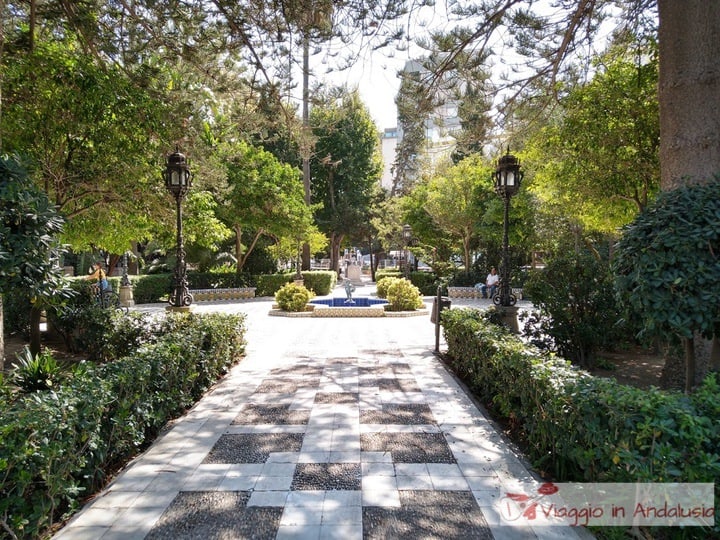
Finally, make your way to the Alameda Apodaca, an elegant seafront garden along which to stroll without a care, in the shade of the trees that face onto the cobbled paths, in search of the impressive centenary Ficus del Mora.
Where to park in Cádiz:
Here are some convenient car parks where you can leave your car and visit Cádiz city centre
I’m an Andalusia lover, constantly exploring cities, small villages, and backroads to tell the story of the region in an authentic way. I manage and write a website dedicated to it, where I share road trip itineraries, practical tips, and lesser-known places for travelers who want a more thoughtful and less touristy experience.