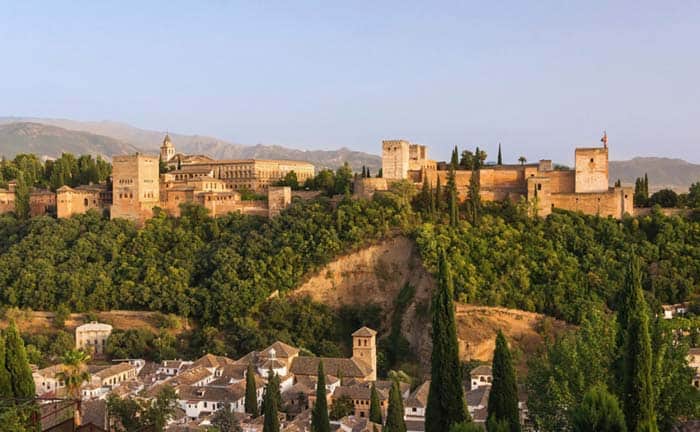
Scenic neighbourhoods like the Albayzín of Granada (or Albaicín or Albaycín) are rare anywhere in Spain. Listed as a UNESCO World Heritage Site alongside Alhambra and Generalife, the city’s Arab quarter combines history, traditions and folklore, and is also a paradise for photographers. While every corner suggests a unique shot, it is from the viewpoints of the Albayzin that you enjoy the best view of the Alhambra set against the peaks of the Sierra Nevada.
Contents
A bit of history
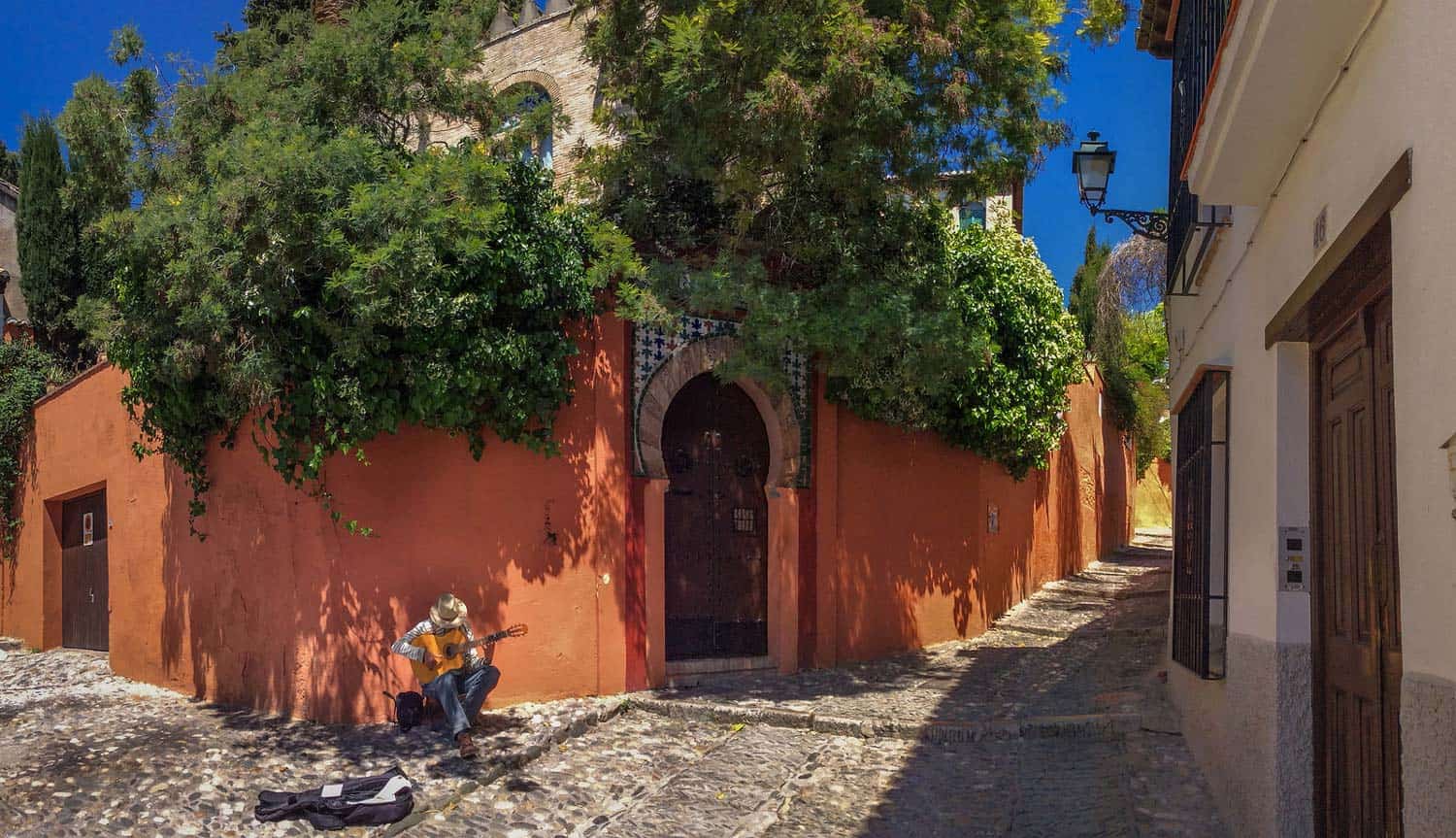
The river Darro separates two hills that face one another, confronting each other day after day. On one stands the fortress of the Alhamba, on the other the Albayzin. Both owe their present fame to the period of Arab domination. The development of this area under Moorish rule brought the white neighbourhood’s population to over 60,000 inhabitants and, in general, the city of Granada was far more populous than it is today.
The question many ask is: if all of Granada was Arab, why is it that today only the Albayzin is so well preserved? The answer lies in the topography of the territory. The flat area of the city – the one, that is, which winds around the Cathedral of Granada – was razed to the ground by the Catholic Monarchs and then rebuilt and gradually altered over time. However, it proved far more complicated to do the same in the hilly part, which was therefore left as it was.
As you wander around the Albayzín, the signs will soon make it clear that Carmen is not an omnipresent woman, but the name given to a typical house, enclosed by a boundary wall and usually containing a garden or vegetable plot of varying size.
Things to do in the Albayzin
This is undoubtedly the area of Granada where, more than anywhere else, it’s well worth getting lost. Exploring the winding alleyways, climbing up and down steps and steep little streets, and turning every corner in search of a picturesque view are the best things to do in this part of the city. However, I’ll try to suggest a route that will ensure you don’t miss the main points of interest.
From Calle Elvira to the Paseo de los Tristes
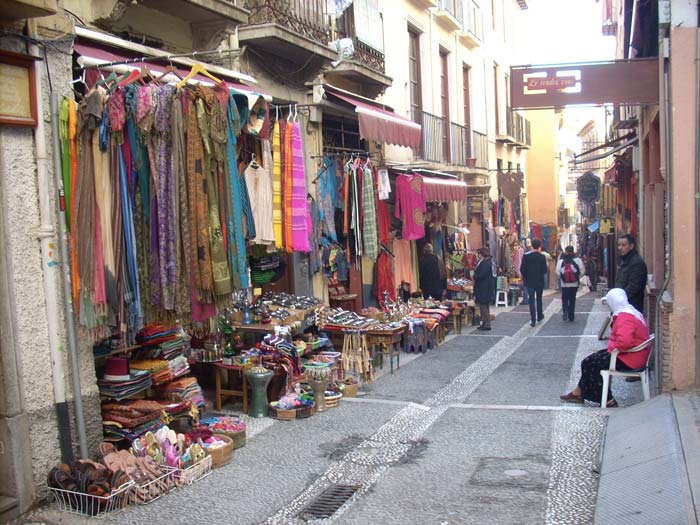
My suggestion is to start at Calle Elvira, which begins where the Calle Reyes Catolicos (one of the main thoroughfares of the historic centre) feeds into Plaza Nueva. Calle Elvira is one of the streets I recommend visiting in the evening, as it’s full of places to eat and drink typical local fare. If you arrive during the day, better early in the morning: walk a couple of streets and then turn right into Calle Caldererìa Nueva.
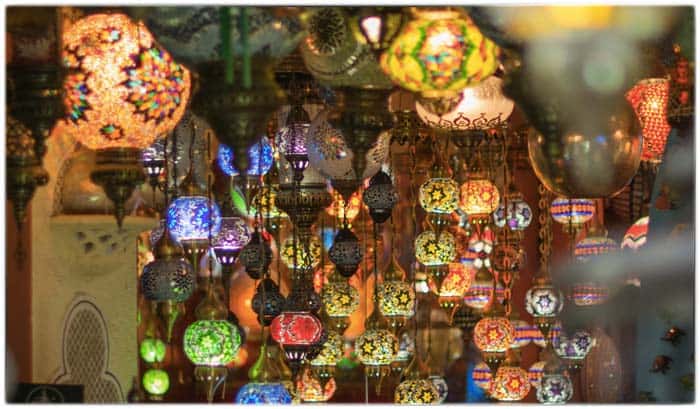
Especially in the evening (which is why I recommend you return at a later time) you will find yourself catapulted into another world, down a street that could easily be in a Moroccan city. Rugs and fabrics, jewellery and lamps: lots and lots of coloured lamps. Objects of every kind reflecting the finest Arab craftsmanship fill small shops that are pleasant to step into even just to look around and breathe in the scent of incense. At any time of day or night, this street and the surrounding ones are perfect for popping into a Teterìa, to savour one of the many varieties of tea and perhaps take a puff of a shisha.
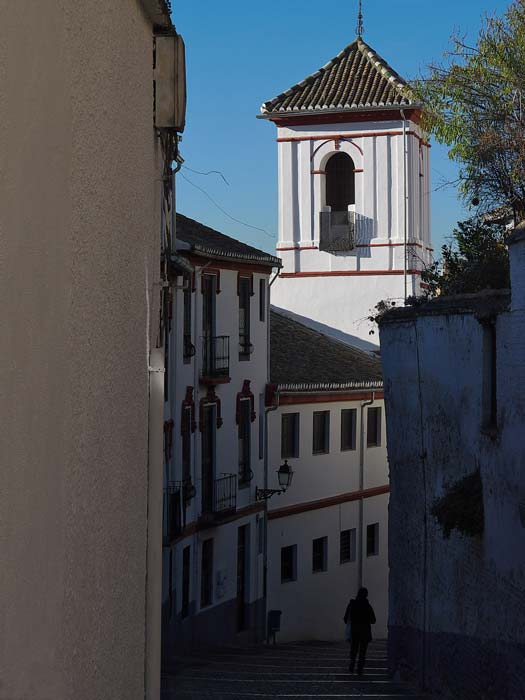
At a leisurely pace, you will reach the Plaza de San Gregorio, with its little church and – very often – the street performers who stop here to play. From here begins the climb to the higher part of the neighbourhood, via the lovely Cuesta de San Gregorio. It’s hard to say which street is best to take: as I mentioned, in this area they’re all worth seeing and, if you have the time, I recommend you explore as much as possible. However, if you turn left up the slope of Calle Grifos de San Josè, you can reach in a few minutes the enchanting Placeta de San Miguel Bajo, one of the most charming corners of the neighbourhood. As you go up, you will also come across the cistern (Alijbe) de San Josè.
When you reach the little square — where a beer and some tapas go down very well — take a short detour to the left, past the cross of the Cristo de las Azucenas up to the Mirador de la Lona. This viewpoint is one of the few that will let you look down over Granada, whereas most of them face towards the Alhambra.
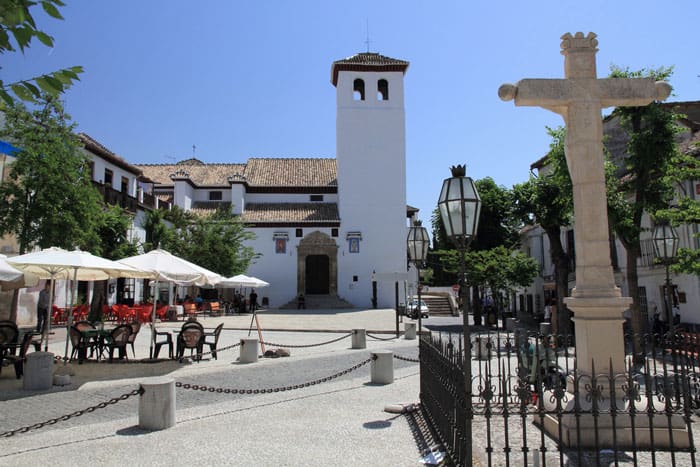
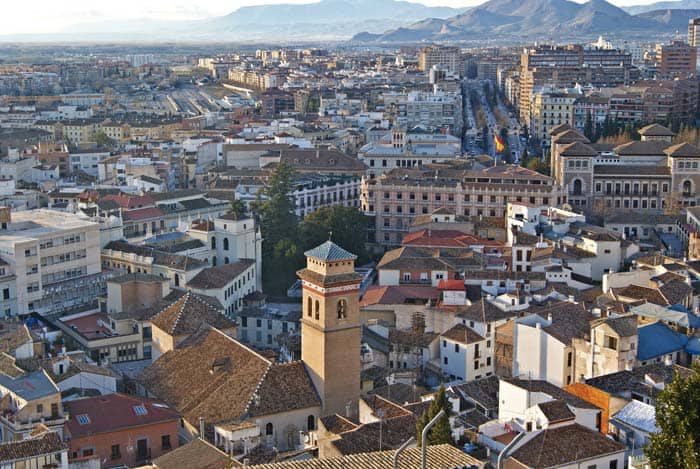
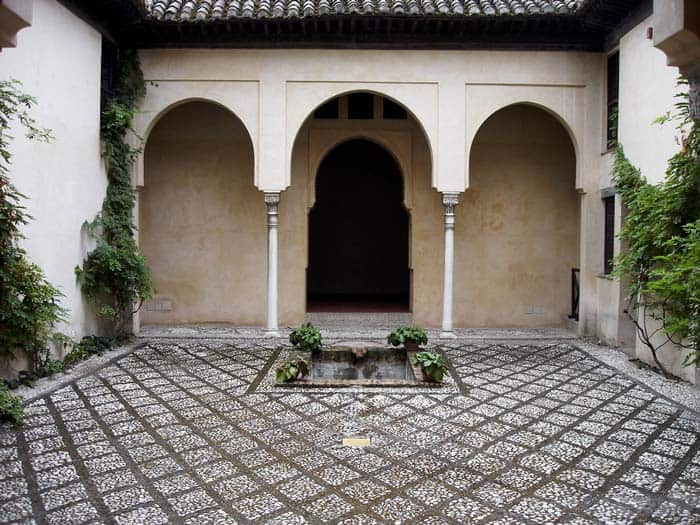
Once back in Placeta de San Miguel Bajo, go past it and continue along Calle Santa Isabel la Real, pausing after a few steps in the uphill square called Placeta Cristo Azucenas. As you climb higher, you can also reach and visit the Palacio de Dar al-Horra (open daily from 09:00 to 14:30 and 17:00 to 20:30 from 1 May to 14 September; from 10:00 to 17:00 from 15 September to 30 April..
Continuing to walk along Calle Santa Isabel, turn left into the narrow Cuesta de Maria de la Miel and immediately right, until you reach the Mirador de San Nicolas. Situated in the square of the same name, with its eponymous church, cistern and bars and restaurants, Granada’s Mirador San Nicolas is undoubtedly the best place from which to admire the Alhambra in all its splendour. Most of the buskers who come to Granada perform in this square too, so entertainment is guaranteed.
Taking Callejon San Cecilio, you’ll arrive at the Arco de las Pesas. The name of the arch comes from the fact that the market used to be held in the Plaza Larga – which you’ll reach after passing it. Not all the merchants were honest and, when rigged weights were confiscated, they were hung on this arch for all to see.
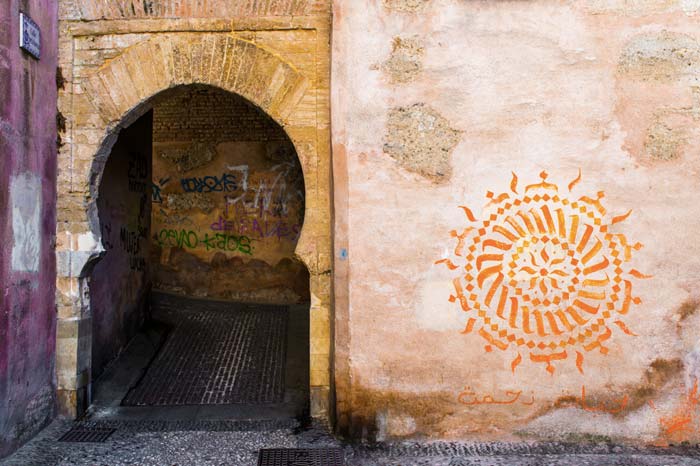
Having passed Plaza Larga, home to a lively traditional market, continue along Calle Panaderos, where you’ll find more affordable alternatives to the tapas bars in the historic centre. At the end of the street, having reached the Church of the Saviour, you can continue up Cuesta del Chapiz, which will allow you to reach two important points of interest:
- At the bottom of the long descent, on the left, you’ll find the Palacio de los Cordova: have a look at the gardens and then set off again
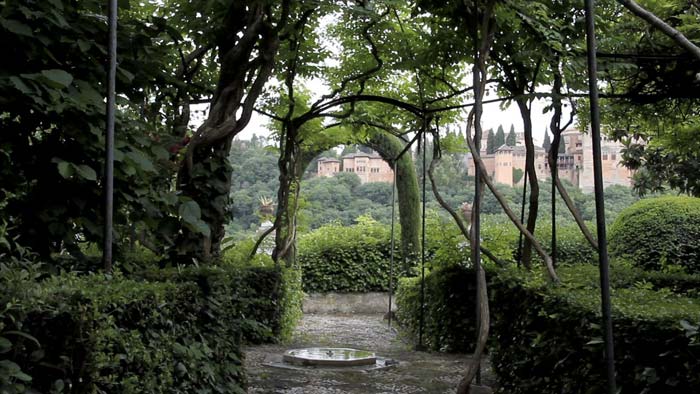
- Less well known, however, is a stop I recommend you make just before, when on the right you’ll find the Residencia universitaria Carmen de la Victoria. Usually, if you ring the bell at this little gate, the porters won’t have much trouble opening it. You obviously can’t go into the residence itself, but the garden is a small secret well worth discovering. Beautiful in its own right, it also proves an excellent vantage point from which to admire the Alhambra from a unique angle.
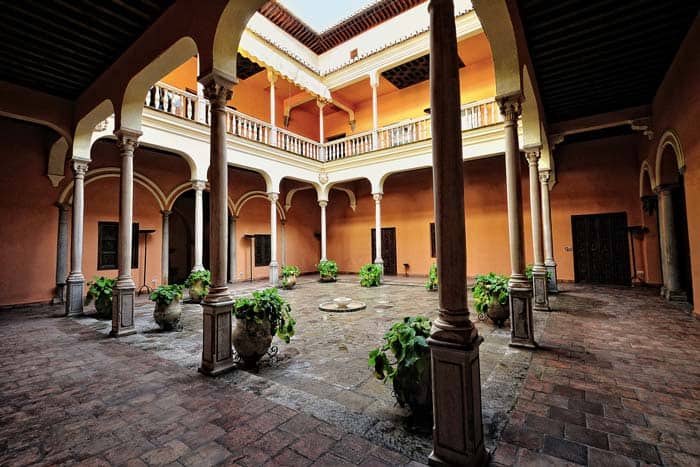
Beyond the Palacio de los Cordova, the descent ends at the Paseo del Padre Manjon, where a broad terrace immediately opens out, an excellent spot to pause. Known as the Paseo de los tristes, this place is actually very lively and will be a pleasant stopping point, in front of the fountain and in the shade of the Alhambra.
The lower part of the Albayzin
Having regained your strength, the exertion isn’t over yet: you are in the lowest part of the Albayzin and from here several streets branch off that are worth a stroll, albeit uphill. Among them, Calle Horno del Oro, where you can step into the patio of the Arab house.
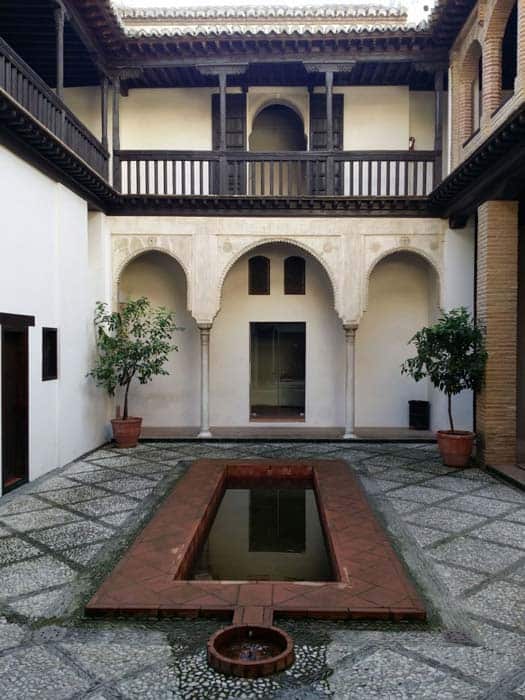
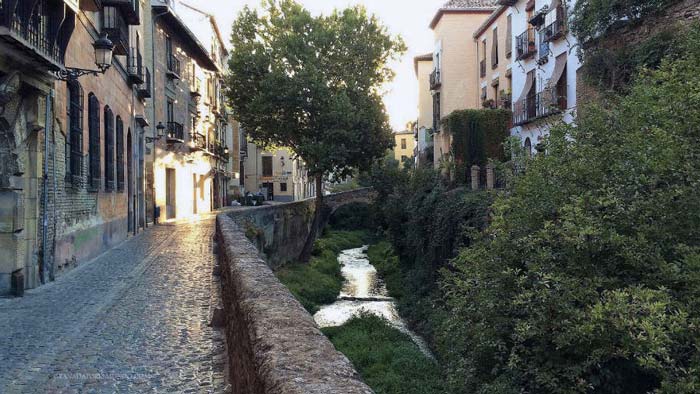
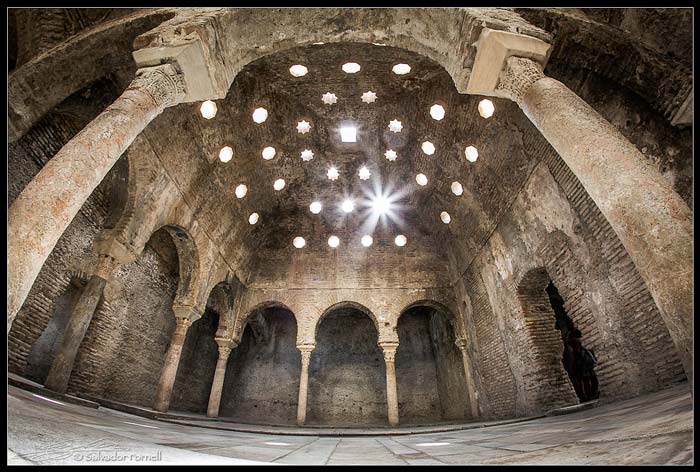
Turning left into Calle San Juan de los Reyes, you can then go back down one of the following little streets, for example the very narrow alley Santisimo. You will thus reach Carrera del Darro at the level of the Museo Arqueológico and the parish of Saint Peter and Saint Paul. Turn right and follow the stream. It is certainly one of the loveliest streets in the area and along it you will also find the remains of the Puente de Cadì, as well as the visitable Bañuelo, the Hammam of Granada. A few more steps and you will be back in Plaza Nueva, where you started.
The Viewpoints of the Albayzin: an exceptional view!
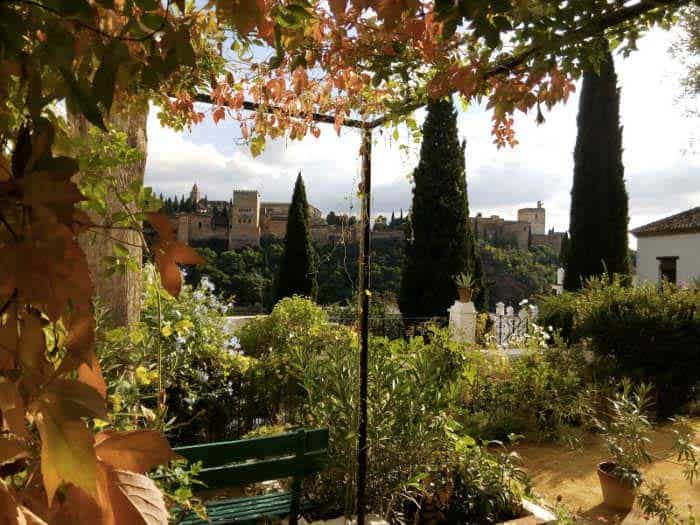
One of the loveliest things to do in these streets is to discover all the viewpoints from which to admire the city and the Alhambra. I’ve already mentioned the most famous of them all, the Mirador de San Nicolas, as well as the Mirador de la Lona and the Mirador de Santa Isabel la Real (Placeta Cristo Azucenas).
There are, however, numerous other viewpoints scattered around the neighbourhood. Among them, the Mirador de Los Carvajales (in the square of the same name) and the Mirador Ojo de Granada (along Calle Cruz de Quito). If you fancy a walk (or, by taking a bus) I suggest you head to the Mirador de San Cristobal, which lies along the Carretera de Murcia, opposite the church of San Cristobal. This is one of the highest points within the Albayzin, and the view is breathtaking.
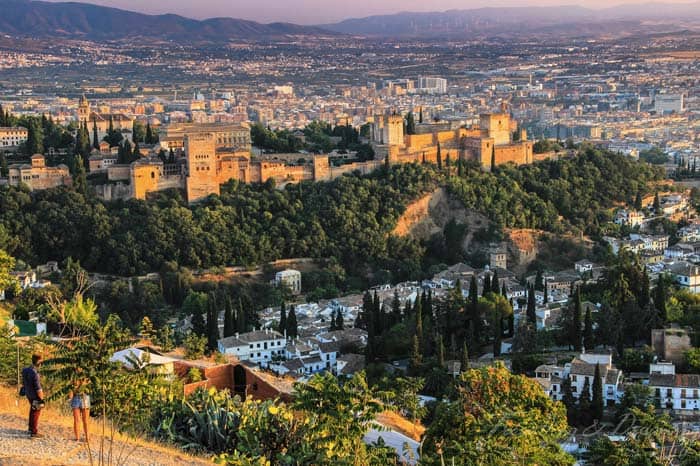
But the widest view is offered by the Mirador de San Miguel Alto. This little open space, set in front of the white chapel and visible from across the city thanks to its isolated position on the hill, is a viewpoint that will leave you breathless. Getting there on foot, especially under the summer sun, is no mean feat, but it allows you to discover the less-touristy, hidden sides of the city, savouring the essence of Granada. If you enter the Albayzin from Puerta Elvira and climb up from there, you’ll also skirt the ancient Nasrid wall.
Where to stay?
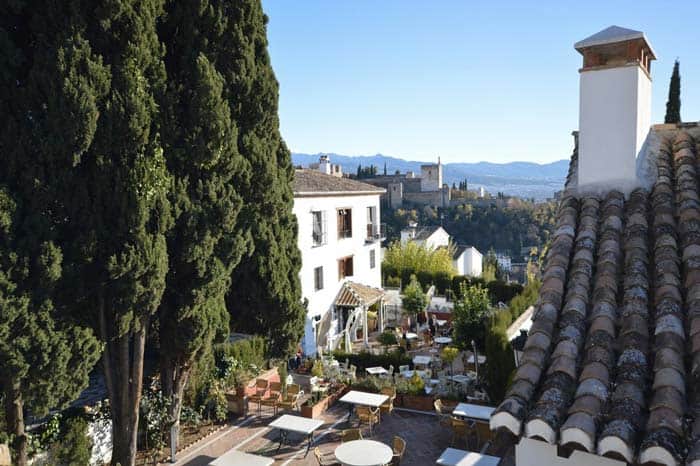
In my opinion, Albayzin is one of the best neighbourhoods where to stay in Granada. I’ve also covered this in my article on places to stay in the city, which I refer you to for further tips. At the link below you’ll find suggestions for some properties in the heart of the neighbourhood… in case you want to experience it fully during your stay in the city.
