If you ask what to see in Granada, undoubtedly the most beautiful and captivating city in Andalusia, there is only one answer: everything! Perhaps the more appropriate question is whether there is anything not worth visiting along the steep little streets of this splendid city, almost 700 metres above sea level, known for being home to the Alhambra, the finest example of Arabic architecture in Spain and, without doubt, one of the most evocative places in all of Europe.
But to limit oneself to talking about this incredible Moorish complex would be to do Granada a disservice. So what to see, then, after descending again from the hill on which, framed by the peaks of the Sierra Nevada, stands the Alhambra, the marvellous “red castle” (qala’at al-harma)? Perhaps the district of Albayzin? Or the enchanting lanes of the Generalife? Visiting Granada really means delving into a jewellery box full of treasures, and what we will summarise for you here is only a small part of what you can see during your trip.
With this guide to Granada we aim to list and briefly describe all the wonders of this city, kissed by the grace of art—an emblematic place where time seems to have stood still, giving rise to a fairytale realm that you can truly experience.
Contents
Granada: what to see on the Alhambra hill
It would take a hefty monograph to recount the history and describe the architectural and artistic subtleties of the Alhambra of Granada, a proud citadel with rose-coloured walls that crowns the top of a hill, but not even a university course could take away the thrill of visiting this masterpiece of Moorish architecture in person. The Alhambra, rightly famed worldwide, is a very popular attraction with tourists, and the best way to visit it may be to choose the low season for your tour of Andalusia.
If, on the other hand, you are looking for a guided tour of the Alhambra, I recommend this Civitatis activity which also includes tickets to the Nasrid Palaces.
Alcazaba
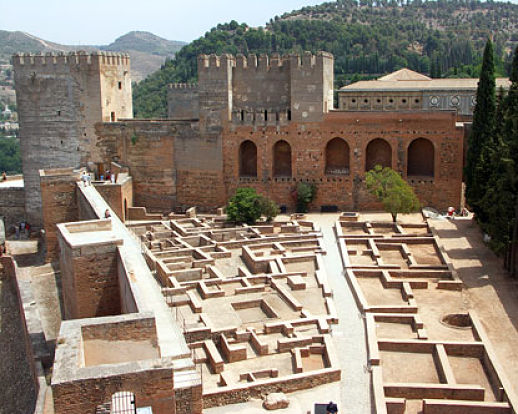
The Alcazaba, one of the oldest sections of the entire citadel, was the military quarter of the Alhambra, the defensive stronghold set to guard the exquisitely refined royal palaces. It’s worth climbing the Torre de la Vela, one of the defensive towers, to enjoy a fine view over the city, before visiting the Jardín de los Adarves, which is a perfect prelude to the wonders of the Alhambra.
Nasrid Palaces
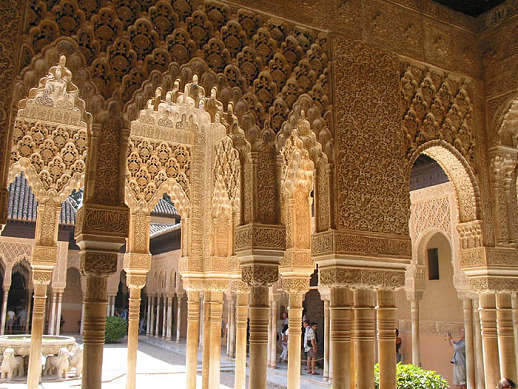
The Nasrid palaces, built in the 11th century by Ibn-al-Ahmar and enlarged by his son, are divided into three sections:
- the Mexuar, whose rooms were used for administrative functions. Don’t miss the geometric charm of the enigmatic Patio del Cuarto Dorado.
- the Palacio de Comares (Serallo) that is the building where ambassadors and distinguished guests were received. Among the other rooms, the Salón de Embajadores, a majestic hall, richly decorated in the mudéjar style.
- the Palacio de los Leones (Harem), the wing of the sultan’s private apartments, whose jewel is the Patio de los Leones, which is so significant that it has become the emblem of the entire Alhambra and of Granada as a whole.
Palace of Charles V
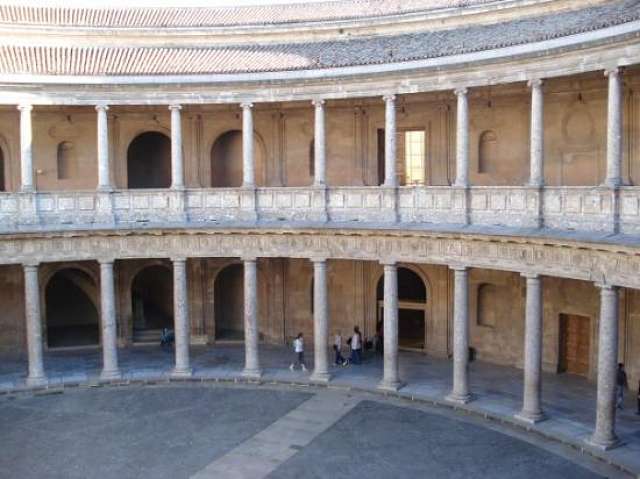
If, after the Reconquista, the Catholic Monarchs Ferdinand and Isabella tried to keep the palace’s structure intact, King Charles V was not as respectful: his decision to build his palace in the heart of the Alhambra entailed the demolition of an entire wing of the Moorish palace. However, although the geometric arrangement of the palace’s architecture clashes strongly with the Palacios, the Renaissance-style building is of undeniable value. We have discussed it in our article dedicated to the Palacio de Carlos V in Granada.
Generalife
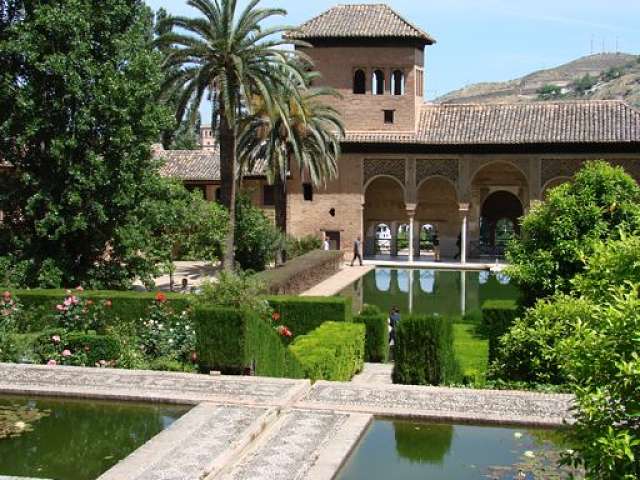
The gardens and the palace of Generalife could be the perfect setting for one of the tales from “One Thousand and One Nights”: it was here that the sovereigns retreated to relax and laze about while on holiday. The Generalife gardens wind along pathways and lush pools, in a harmonious succession of flower-filled patios, fountains and staircases with cascading water, up to the lavish summer palace.
Carmen of the Martyrs
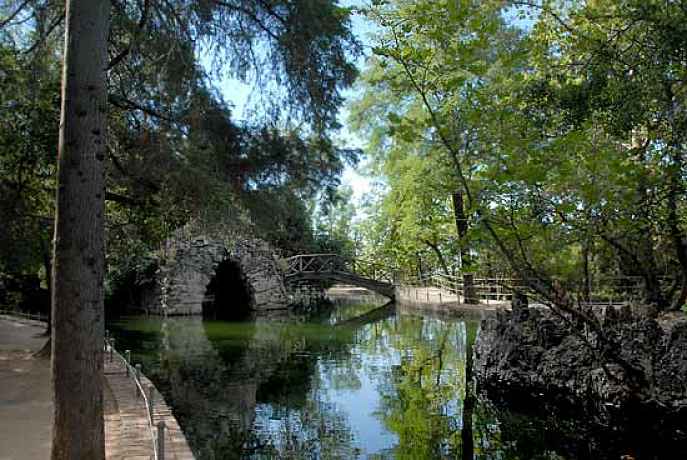
Descending from the Alhambra hill, weary from the visit, and before exploring the more secret side of Granada, don’t forget to detour to the beautiful Carmen de los Mártires, a complex of elegant gardens where you can enjoy a relaxing atmosphere, exploring paths among artificial grottoes, statues and flowerbeds along a small pond.
Manuel de Falla House Museum
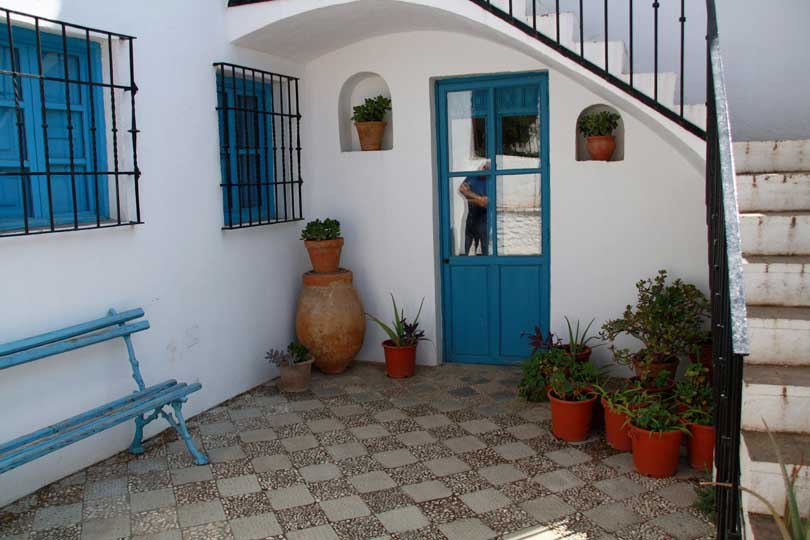
Not far away is the Casa Museo Manuel De Falla: the home of the great Spanish composer is magnificently preserved, so much so that, when you visit, you half expect him to step back in, in the flesh, at any moment.
Convent of San Francisco
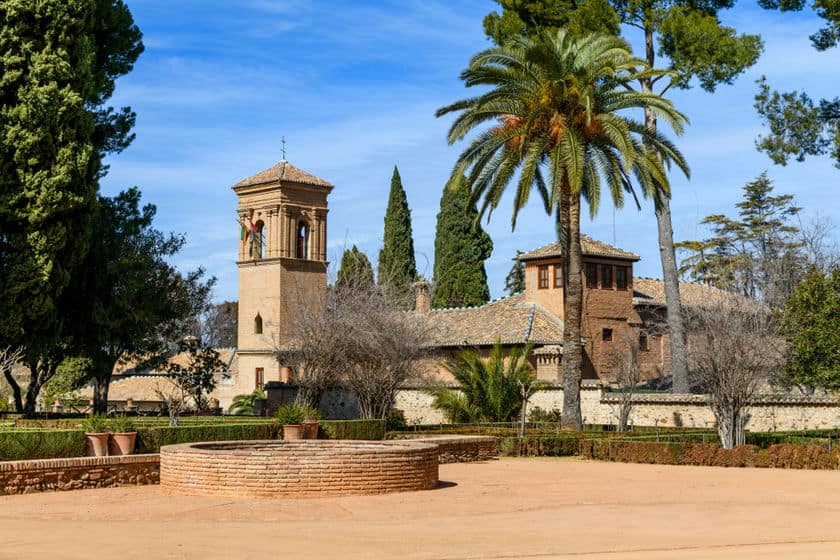
Not far from the palace, where today the Parador de Granada stands, there originally stood the Convento de San Francisco, particularly important because it housed the remains of Isabella and Ferdinand before they were transferred to the Capilla Real. The remains of the chapel can be found.
The neighbourhoods of Albayzín and Sacromonte
It is not only the lavish palaces and gardens that have projected the charm of Granada into the popular imagination. The popular atmosphere of the neighbourhoods of Albayzín and Sacromonte helps travellers immerse themselves in the rhythm and warmth of Andalusian life.
Albayzín
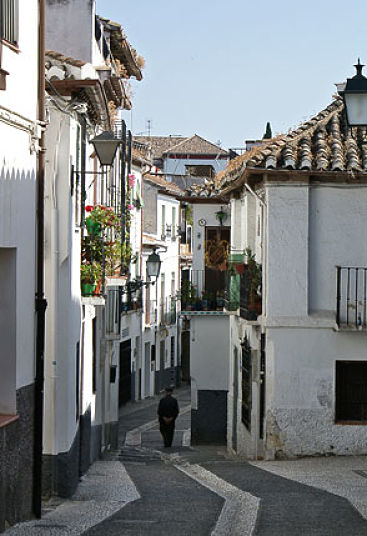
The Albayzín neighbourhood, situated on a hill facing the Alhambra, rises above the course of the River Darro, with its narrow lanes and evocative glimpses of terraces and small squares, and has retained intact its romantic medieval appearance and the ancient, convoluted urban layout, so much so that it has been declared a UNESCO World Heritage Site. Some examples?
The Paseo de los Tristes, the arabesque Calle Calderería Nueva, the Placeta Porras, the market square Plaza Larga, the enchanting Mirador de San Nicolás (see below) and finally the most charming square of the barrio, Plaza de San Miguel Bajo.
Wandering the streets of the neighbourhood, you will come across numerous buildings with patios and gardens well worth visiting: the Casa de Chapiz, the Casa Horno del Oro, the Palacio de los Cordova, the Palacio de Dar al-Horra, the Casa de Zafra… Want to know more? Read our article about the Albaycin.
Bañuelo (Arab baths)
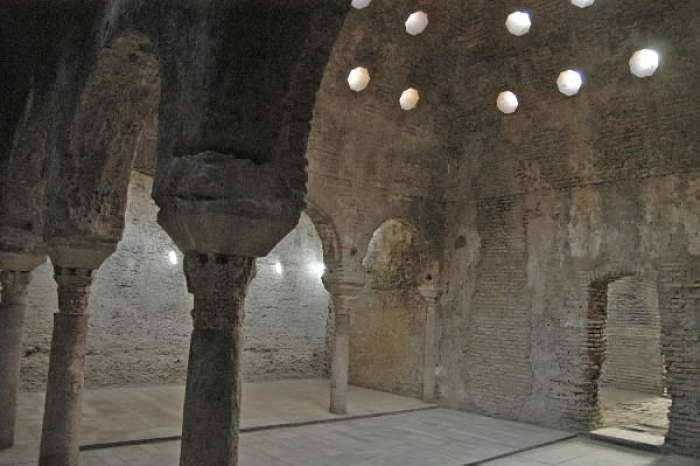
One of the main places of interest in the Albayzin is the Bañuelo, the old name for the Arab baths. You will find it along the Carrera del Darro, on the river’s northern bank. The Arab baths, dating from the time of the Alhambra’s sultans, have been restored and offer visitors rooms with star‑vaulted ceilings and majestic colonnades: we’ve covered them in our article dedicated to this splendid and ancient hammam of Granada.
San Nicolàs Viewpoint
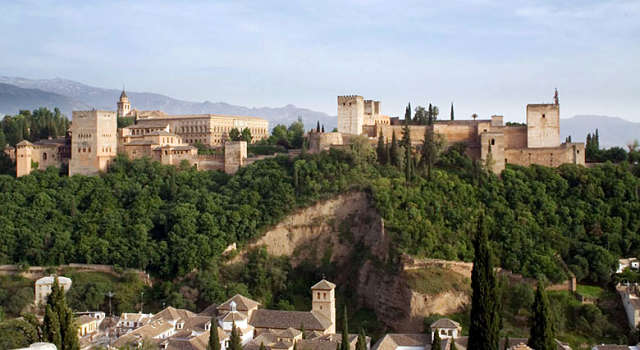
If you want to enjoy the most beautiful view of Granada, make your way to this mirador, from which you can take in the vast spectacle of the city, with the Alhambra looming over the peaks of the Sierra Nevada: it is undoubtedly a vantage point that, when visiting Granada, you must not miss. Descending from the miradór, look for the Convento de Santa Isabela la Real, famed for its mudéjar-style ceiling.
Sacromonte
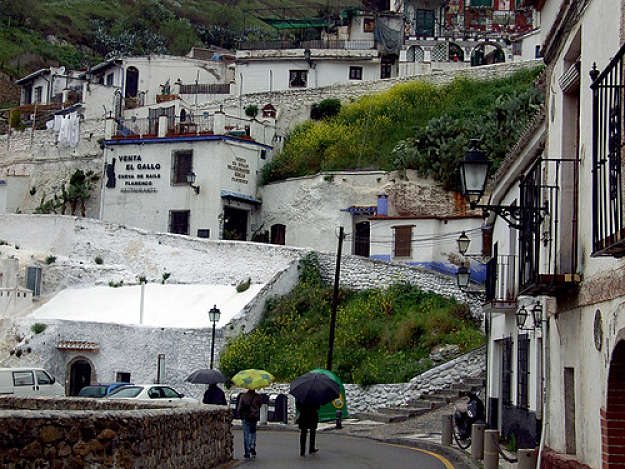
Sacromonte is Granada’s second best-known and liveliest district. What is there to see in this distinctive cluster of small white houses clinging to the hillside? The main attractions are undoubtedly the cuevas, the caves where the Roma community lived alongside all those who had been driven out of the city after the Reconquista.
These caves, which can still be visited today, once echoed with the haunting and sensual melodies of flamenco, and the district remains a setting for popular festivals and performances accompanied by the sound of guitars. Among the other things to see in Sacromonte, I recommend the Museo Cuevas del Sacromonte, which makes the effort of reaching it at the top of the hill well worth it.
Other places of interest in Granada
Royal Chapel
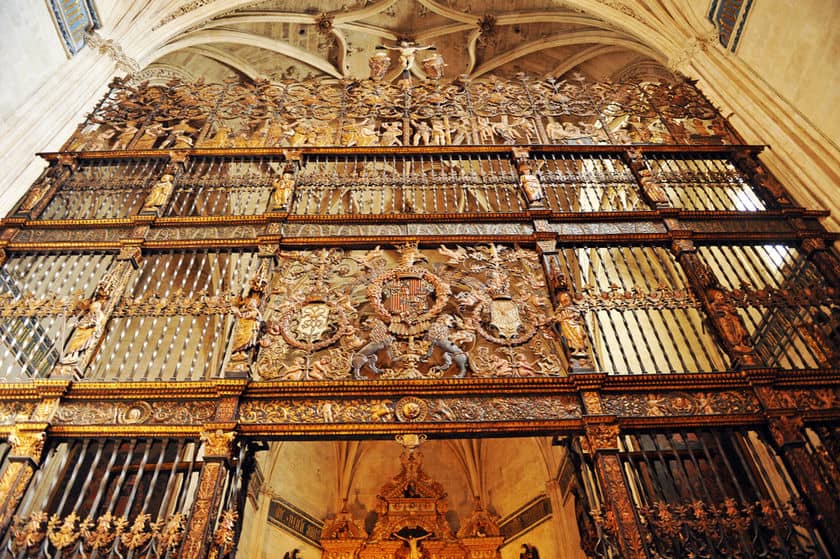
A Granada Arab art and culture are not a mere influence but a central guide to understanding the city; nevertheless there are notable examples of Christian architecture: the finest is the Capilla Real, the mausoleum of the Catholic Monarchs, built in the Gothic style between 1505 and 1517. The building, distinguished by a marvellous retablo, houses in its crypt the remains of the monarchs Isabella and Ferdinand, of Joanna the Mad and of Philip I. Here is our in‑depth piece on the Capilla Real.
Cathedral
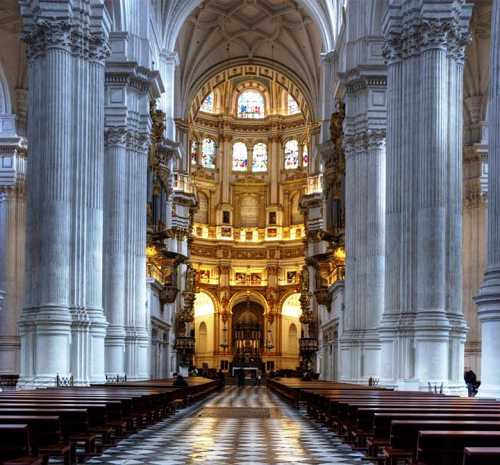
Alongside the Capilla Real, the most striking example of Christian architecture in the Renaissance style is the Catedral Metropolitana de la Encarnación, which has the arduous task of holding its own against the other wonders of the city. As was often the case during the Reconquista, the cathedral was built during the 16th century on top of the structure of an ancient mosque, but remained unfinished for two centuries.
Because of the time lag between design and construction, the façade is Baroque in style, while the majestic interiors were built by the architect De Siloe in a Gothic-Renaissance style. For further information and advice I refer you to our article on the Cathedral of Granada.
Monasterio de la Cartuja
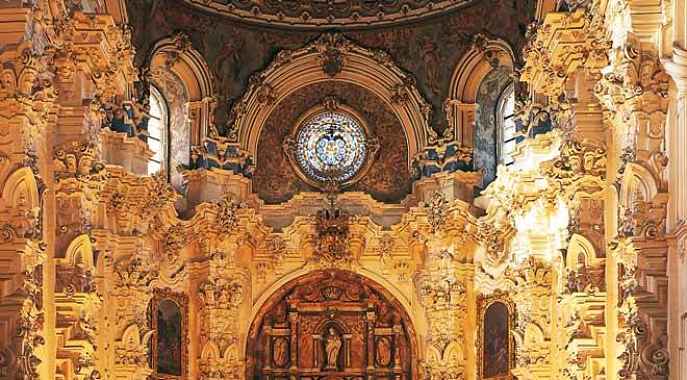
To the north of Granada city centre, you will find the lavish Monasterio de la Cartuja, a Carthusian monastery in the Baroque style, whose Plateresque portal’s magnificence will astonish you, the impressive gilded dome adorned with frescoes, the elaborate coloured marble altar, and the sacristy, likewise brimming with ornamental excesses. The exterior patio instils a great sense of peace, and will allow you to rest after a long day of tiring sightseeing.
We recently discovered the existence of the Alhambra Card, a pass that guarantees admission to the Alhambra even when tickets are sold out elsewhere. The card includes admission to many other paid attractions in Granada. Here they are in detail:
- Alhambra
- Granada Cathedral
- Royal Chapel
- Monastery of La Cartuja
- Monastery of San Jerónimo
- Science Park Museum
- Museo CajaGRANADA
- City bus: 9 journeys on the local network
.
The Madraza
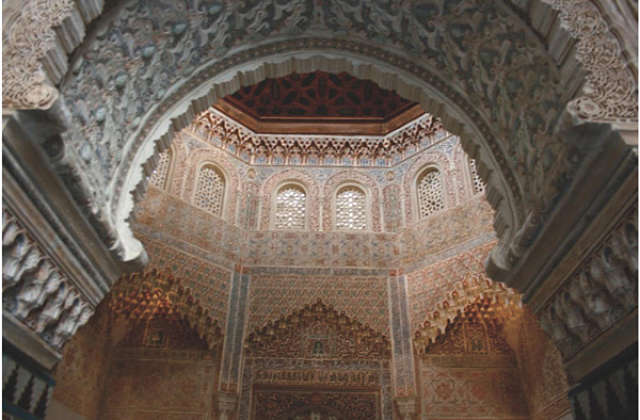
Not far from the Capilla Real you will find the Madraza, a marvellous building that was the University of Granada, founded in the 14th century by Yusuf I. Some visitors maintain that, in terms of beauty, the small Madraza is second only to the halls of the Alhambra palace, owing to the presence of a brilliantly coloured mihrab that is perfectly preserved, and of ceilings decorated in an elaborate mudéjar style.
Corral del Carbon and Alcaiceria
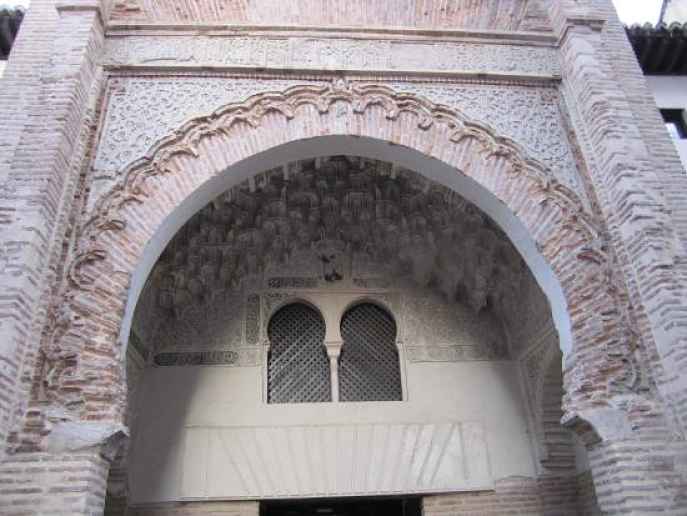
What else is there to see in Granada, after all these exceptional masterpieces? Venture into the maze of narrow streets south of the Cathedral and you will find this singular building, which in the past served as an inn for merchants, not far from the silk markets. Admire the wonderful mudéjar portal (horseshoe-shaped) and the unadorned patio with a fountain in the centre.
The Corral del Carbon is located near the Alcaiceria, a small, narrow Arab market accessible through a little arched doorway: a good place to buy a souvenir of your trip.
Cuarto Real de Santo Domingo
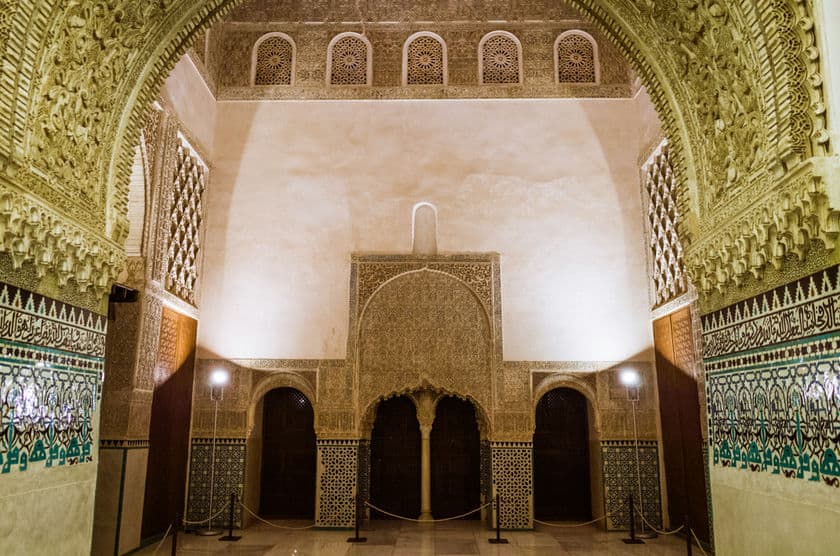
A little-known building in Granada, but once you have visited the other attractions it can be reached for a quick visit. What remains of the ancient Nasrid residence that served as the sultans’ lodgings in the El Realejo neighbourhood are the gardens and the qubba, a reception room decorated in the mudéjar style. The upper floor is used for exhibitions and art installations.
Where to park in Granada?
The best way to get around Granada is undoubtedly on foot: there will be some rather tiring ups and downs (especially between the Alhambra and the Albayzin areas), but it will be worth it. If, however, you need to tackle the issue of parking your car in Granada, here are some car parks that may come in handy:
- AUSSA Hermanos Maristas: Granada city centre
- Puerta Real Granada APK: Granada city centre
- Parking Severo Ochoa: station
- Parking Socrates: Albayzin neighbourhood
… and now? What are the next steps?
Now that you know what to see in Granada, it’s time to make some other important decisions. Here is a series of useful articles:
- advice on where to stay in Granada
- advice on when to visit Granada
- tips on where to eat in Granada
- the beaches in the province of Granada
- car parks available in Granada
