If you’ve already been to Malaga, you will probably know that it is the city where one of the most important artists of the 20th century, Pablo Picasso, was born in 1881. It was the artist’s wish to have a museum dedicated to his works in his home town, and it was his daughter‑in‑law Christine who committed herself to the project of opening the Museo Picasso in Malaga, despite there already being two others, one in Paris and one in Barcelona.
Visiting this excellent museum means embarking on a journey to discover the life and works of Picasso through his personal and artistic development, as well as to learn interesting aspects of the history of the city of Malaga, of which Picasso was a central figure. Moreover, it is an excellent opportunity to discover not only Picasso, but also the work and temporary exhibitions of other contemporary artists, all within the magnificent setting of a building that stands as a splendid example of Andalusian Renaissance architecture.
Don’t these reasons seem enough to visit the Picasso Museum in Malaga, the institution that was awarded “the second most visited museum in Andalusia”?
Contents
The Picasso collection
The Museo Picasso houses a collection of 204 works. 155 of these were donated, while the remaining 49 are on loan to the museum from two private collections, those of Christine Ruiz-Picasso (wife of Paul, the artist’s eldest son) and Bernard-Ruiz Picasso (his grandson). The collection also includes some family paintings, such as Paulo con gorro blanco, a portrait from the 1920s of Picasso’s eldest son.
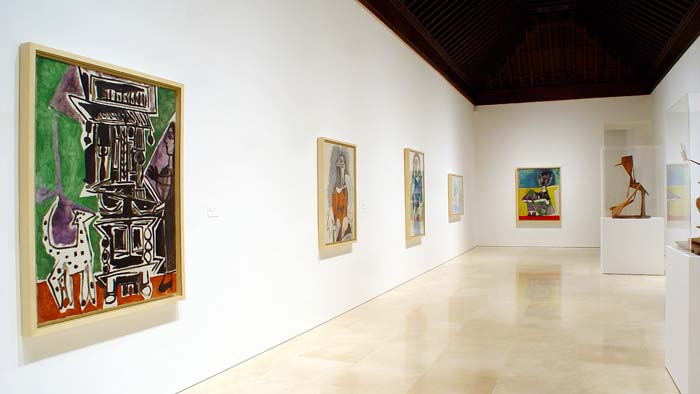
The Picasso Museum in Malaga offers a chronological tour through an engaging collection of artworks, presenting the various styles, techniques and materials the painter experimented with and developed, from his early years through to his artistic maturity. It is fascinating to see how Picasso’s artistic expression evolved over the course of his life, and how, as he moved through the different phases, it mirrored the experiences he went through.
Moreover, although the works on display are the protagonists of the exhibition, they are not alone: one can admire, in fact, sculptures and ceramics created by the artist, as well as objects connected to his private life that highlight the painter’s link to the city of Malaga. All of this helps us to understand the importance of Picasso’s legacy in the history of art and in the cultural and artistic destiny of the Andalusian city.
Main works on display at the Picasso Museum in Malaga
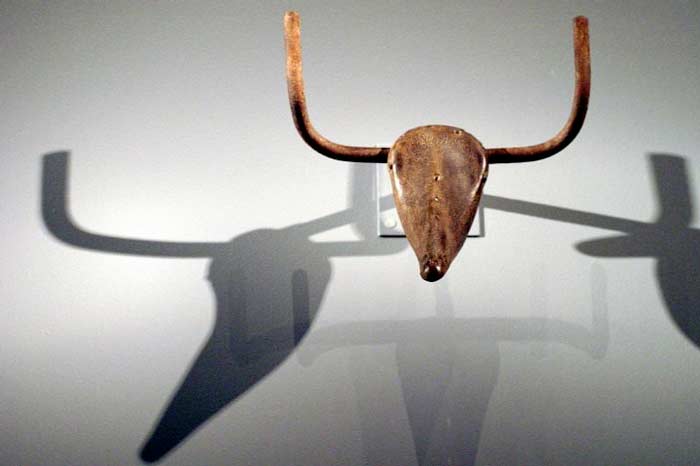
In March 2017 the collection was renewed, and important new works by Picasso were introduced. Among the works on display at the Museum, notable are Restaurante, an oil on glass from 1914 exhibited for the first time in the Malaga collection, the large canvas Las Tres Gracias dating from the golden period of the painter’s career, the work La Siesta from 1932, a perfect representation of the forms and styles of the 1930s, and the iconic Cabeza de Toro (1942), a bronze made from the saddle and handlebar of a bicycle.
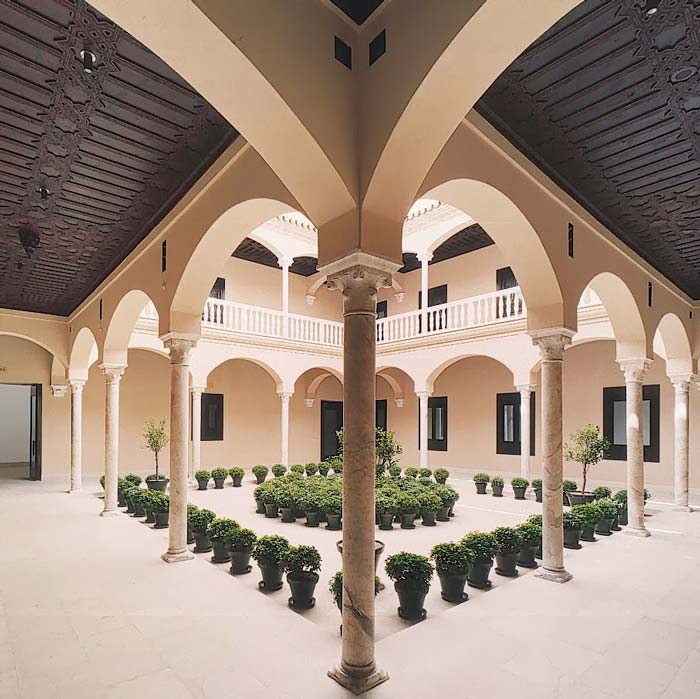
The Museo Picasso in Malaga is housed within the Palacio de Buenavista, a magnificent example of Andalusian Renaissance architecture. Built by Diego de Cazalla, treasurer of the royal army who took part in the city’s conquest in 1487, the palace was declared a national monument in 1939. A few years later it was leased to the State to house the Museo Provincial de Bellas Artes, which remained open until 1997, when the palace was purchased to form part of the Museo Picasso project.
The principal donor, Christine Ruiz-Picasso, wanted the collection to be displayed in a typically Andalusian building. The Museo Picasso was inaugurated in 2003, and today is one of the city’s most important tourist attractions.
You absolutely must not miss a visit to the museum’s basement: during the construction work Phoenician, Roman, Islamic and Renaissance ruins were uncovered, important testaments to Malaga’s roots and history.
Useful information for your visit
Opening Hours
The museum is open every day, but the opening hours vary according to the season:
- September and October: from 10:00 to 19:00
- From November to February, 10:00 to 18:00
- From March to June: from 10:00 to 19:00
- July and August: from 10:00 to 20:00
Furthermore, on certain public holidays the museum has different opening hours:
- 24 and 31 December, 5 January: from 10:00 to 15:00
- From 26 to 30 December and from 2 to 4 January: from 10:00 to 19:00
- Easter holidays: from 10:00 to 20:00 (every day)
The Picasso Museum is closed on 25 December, 1 January and 6 January.
Ticket prices and museum tours
- The admission ticket to visit the Picasso Collection costs 13 euros. The palace also hosts a temporary exhibition by a contemporary artist: if you want to buy the combined ticket to visit both the Picasso Collection and the temporary exhibition, the price is 13 euros (reduced 11 euros).
- Students under the age of 26, people aged 65 and over, and holders of the Euro Youth Card are entitled to a reduced ticket.
- People with disabilities, unemployed people (with a valid document proving this), children under 13 and students of the University of Malaga are entitled to free admission.
- Furthermore, admission is free for everyone every Sunday during the museum’s final two hours.
The ticket can be purchased at the Museum ticket office or, if you wish to avoid the queue, you can buy it online via the link below. It also includes the audio guide and access to the temporary exhibitions, the archaeological area and the Photocall space.
Tickets for the Picasso Museum
It is also advisable to take the audio guide, which is available in 10 languages for the Picasso Collection, and in 2 for the temporary exhibitions. The audio guide is free, as it is included in the ticket price. If, however, you are entitled to free admission, the audio guide will cost you 1 euro.
How to get to the museum
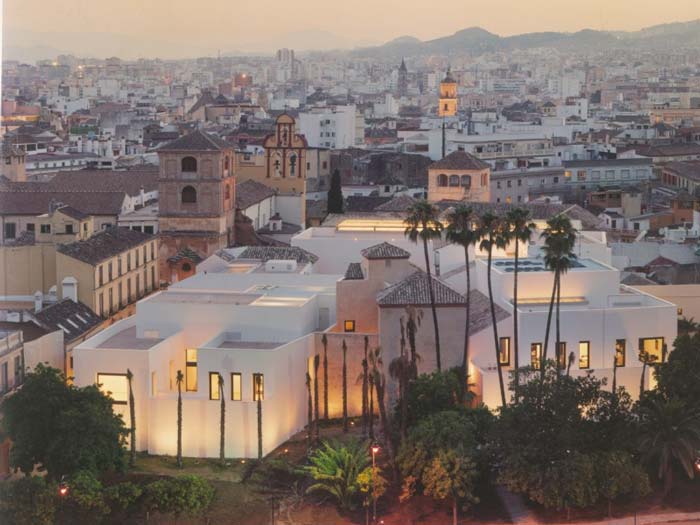
The Museo Picasso is located at calle San Augustín 8, in the heart of the historic centre of Malaga. Therefore, if your hotel in Malaga is central, you can reach the museum on foot; otherwise it is advisable to take a bus that drops you at Plaza de la Merced or at Paseo del Parque-Ayuntamiento.
The bus lines that stop at Plaza de la Merced are numbers 1, 11 and C1, while many other buses pass by Paseo del Parque-Ayuntamiento, including 4, 14, 16, 19 and 24.
Very close to the Picasso Museum you will find the Alcazaba, the Roman Theatre and the Cathedral of Malaga, some of the attractions in Malaga that are well worth a visit. Additionally, if you fancy a stroll along the seafront, the Museum is close to Malaga’s paseo marítimo.
Where to stay?
As with all the other attractions mentioned, the Museo Picasso Malaga is located in the Centro neighbourhood, which remains the recommended area to stay.
